
Using essential oils around kids sounds simple-just a few drops in a diffuser, right? But many parents don’t realize that children’s bodies react differently to aromatherapy than adults’. Their skin is thinner, their lungs are smaller, and their liver and kidneys are still developing. That means what’s safe for you might not be safe for them. The good news? With the right approach, aromatherapy can be a gentle, natural way to support kids’ sleep, mood, and comfort. But it needs to be done carefully.
Why Kids Need Special Care with Aromatherapy
Children under 12 have a higher ratio of skin surface area to body weight than adults. That means they absorb more of what’s applied topically. Their respiratory systems are also more sensitive. A scent that relaxes you might overwhelm a toddler. Studies show that some essential oils, like eucalyptus and peppermint, can trigger breathing problems in young children, especially under age 2. The American Academy of Pediatrics warns against using these oils near infants because of the risk of airway irritation.
Even diffusing oils in a room can be risky if not done right. Kids spend more time on the floor, where oil particles settle. If a diffuser runs all night in a small bedroom, the concentration builds up. One 2023 study in the Journal of Pediatric Respiratory Care found that 18% of children under 3 exposed to continuous diffuser use showed mild respiratory symptoms like coughing or nasal congestion.
Which Oils Are Safe for Kids?
Not all essential oils are created equal when it comes to kids. Some are gentle enough for daily use. Others should be avoided completely. Here’s what pediatric aromatherapy experts recommend:
- Lavender - The most widely studied oil for children. It’s been shown to improve sleep quality and reduce anxiety in kids as young as 6 months. A 2021 trial with 85 children found that lavender-scented pillows helped kids fall asleep 20% faster.
- Chamomile (Roman) - Calming and soothing. Often used for fussiness, teething, or mild stomach upset. Always use steam-distilled, not solvent-extracted.
- Cedarwood - Helps with relaxation and can ease congestion. Safe for kids over 2 years old when diluted properly.
- Orange (sweet) - Uplifting and non-irritating. Great for mood support. Avoid bitter orange-it can cause photosensitivity.
- Frankincense - Used for emotional balance and minor skin irritations. Very low risk when diluted.
On the other hand, avoid these oils entirely for kids under 10:
- Eucalyptus
- Peppermint
- Rosemary
- Wintergreen
- Thyme
These contain high levels of 1,8-cineole or menthol, which can slow breathing in young children. Even a single drop of peppermint oil on the chest can cause breathing trouble in a baby.
How to Use Aromatherapy Safely with Kids
Diffusing oils isn’t the only way-and sometimes not the best. Here are safer methods:
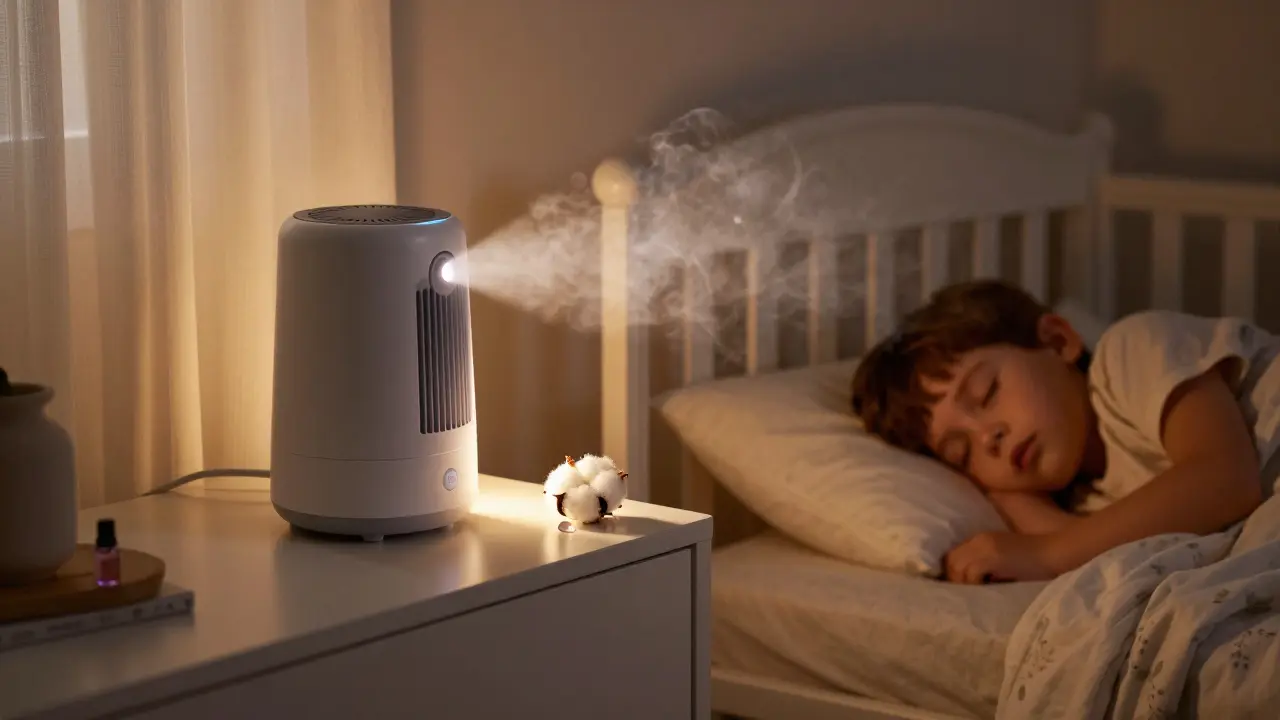
- Use a cold-air diffuser-not ultrasonic. Cold-air diffusers release fewer particles into the air. Run it for no more than 30 minutes at a time, and only in a well-ventilated room.
- Keep it low-place the diffuser at least 6 feet away from the child’s bed or play area. Never put it on the nightstand next to their head.
- Dilute topicals-if applying to skin, use a 0.25% to 0.5% dilution. That’s 1 drop of essential oil per 1 teaspoon of carrier oil (like coconut or jojoba). Always test on a small patch of skin first.
- Never apply undiluted-not even lavender. Kids’ skin is too sensitive.
- Avoid ingestion-never let kids smell or taste oils. Even a teaspoon of some oils can be toxic.
- Store out of reach-treat essential oils like medicine. Lock them up.
When to Skip Aromatherapy
Some kids should avoid aromatherapy entirely:
- Babies under 3 months
- Children with asthma or epilepsy
- Kids with sensitive skin or eczema flare-ups
- Those taking prescription medications (some oils interact with seizure meds or antidepressants)
If your child has a known allergy, do a patch test before any use. Put one drop of diluted oil on the inner forearm. Wait 24 hours. If there’s redness, swelling, or itching, don’t use it.
Real-Life Scenarios That Work
Many parents find simple routines helpful:
- Bedtime - Add 1 drop of lavender to a cotton ball, tuck it into the corner of the crib (not inside the bedding). Or diffuse for 15 minutes before sleep.
- Car rides - Use a personal inhaler (a small tube with a cotton wick) with 1 drop of orange oil. Let the child breathe it gently-no direct spraying.
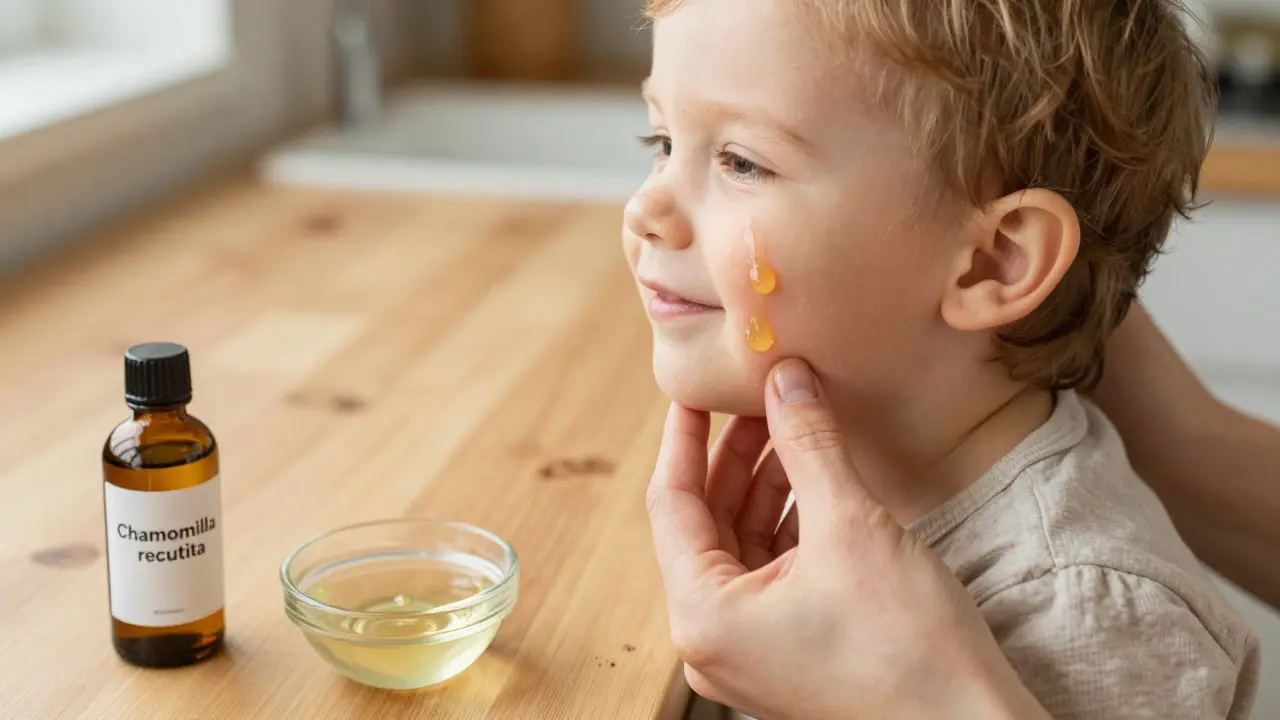
- Teething - Mix 1 drop of chamomile with 1 tablespoon of coconut oil. Gently rub along the jawline (not inside the mouth).
- Minor bumps - Dilute 1 drop of frankincense in 1 teaspoon of aloe vera gel. Apply lightly to bruises.
One mom in Orlando told me her 4-year-old used to wake up 3 times a night. After using a lavender-scented cotton ball in his pajama pocket for two weeks, he started sleeping through the night. No chemicals. No melatonin. Just a gentle scent and consistency.

What to Look for When Buying Oils
Not all essential oils are created equal. Look for:
- Purity - The label should say "100% pure essential oil." Avoid "fragrance oil," "perfume oil," or "aroma oil"-those are synthetic.
- Botanical name - For lavender, it should say Lavandula angustifolia. For chamomile, Chamomilla recutita.
- Dark glass bottles - Light degrades oils. Clear bottles mean poor quality.
- Third-party testing - Reputable brands provide GC/MS reports (gas chromatography/mass spectrometry) showing what’s inside.
Brands like Plant Therapy, Young Living, and doTERRA have kid-safe lines, but always double-check their dilution guidelines. Some even label oils as "KidSafe"-that’s a helpful shortcut.
What to Do If Your Child Has a Reaction
Signs of a bad reaction:
- Difficulty breathing
- Skin rash or swelling
- Vomiting or drowsiness
- Unusual crying or agitation
If you notice any of these:
- Stop using the oil immediately.
- Move the child to fresh air.
- Wash skin with mild soap and water if applied topically.
- Call Poison Control at 1-800-222-1222 (U.S.)-they’re available 24/7.
- Don’t induce vomiting unless instructed.
Even if symptoms seem mild, it’s worth a call. Essential oil toxicity can be silent at first.
Final Thoughts: Less Is More
Aromatherapy isn’t a cure-all. It’s a gentle tool. For kids, it works best when used sparingly, consistently, and with deep respect for their developing bodies. You don’t need to use oils every day. Sometimes just one drop, once a week, is enough. Trust your instincts. If something feels off, skip it. Your child’s safety always comes before the trend.
Can I use essential oils on my baby under 6 months?
It’s not recommended. Babies under 6 months have extremely sensitive skin and underdeveloped livers that can’t process essential oil compounds effectively. Stick to non-scented calming methods like gentle rocking, white noise, or swaddling. Wait until your child is at least 6 months old before considering any aromatherapy.
Is it safe to diffuse oils in my child’s room at night?
Only if you follow strict rules: use a cold-air diffuser, run it for 15-30 minutes before bedtime, and turn it off before the child sleeps. Never leave it running all night. Keep the diffuser at least 6 feet away from the bed and in a well-ventilated room. Lavender is the safest choice if you choose to diffuse.
Can I use peppermint oil for my child’s headache?
No. Peppermint oil contains menthol, which can slow breathing in children under 6. Even diluted, it’s too risky. For headaches in kids, try a cool compress on the forehead, rest in a dark room, or offer water. If headaches happen often, talk to your pediatrician.
What carrier oils are best for kids?
Use coconut oil, jojoba oil, or sweet almond oil. These are mild, non-irritating, and easily absorbed. Avoid peanut oil due to allergy risks. Always use cold-pressed, unrefined oils. Mix 1 drop of essential oil per teaspoon of carrier oil for children over 2.
Are essential oil diffusers regulated by the FDA?
No. The FDA does not regulate essential oils as medicines or even as cosmetics. They’re sold as aromatherapy products, which means manufacturers aren’t required to prove safety or effectiveness. That’s why you need to choose brands that provide transparency-like GC/MS reports-and avoid anything that sounds too good to be true.