
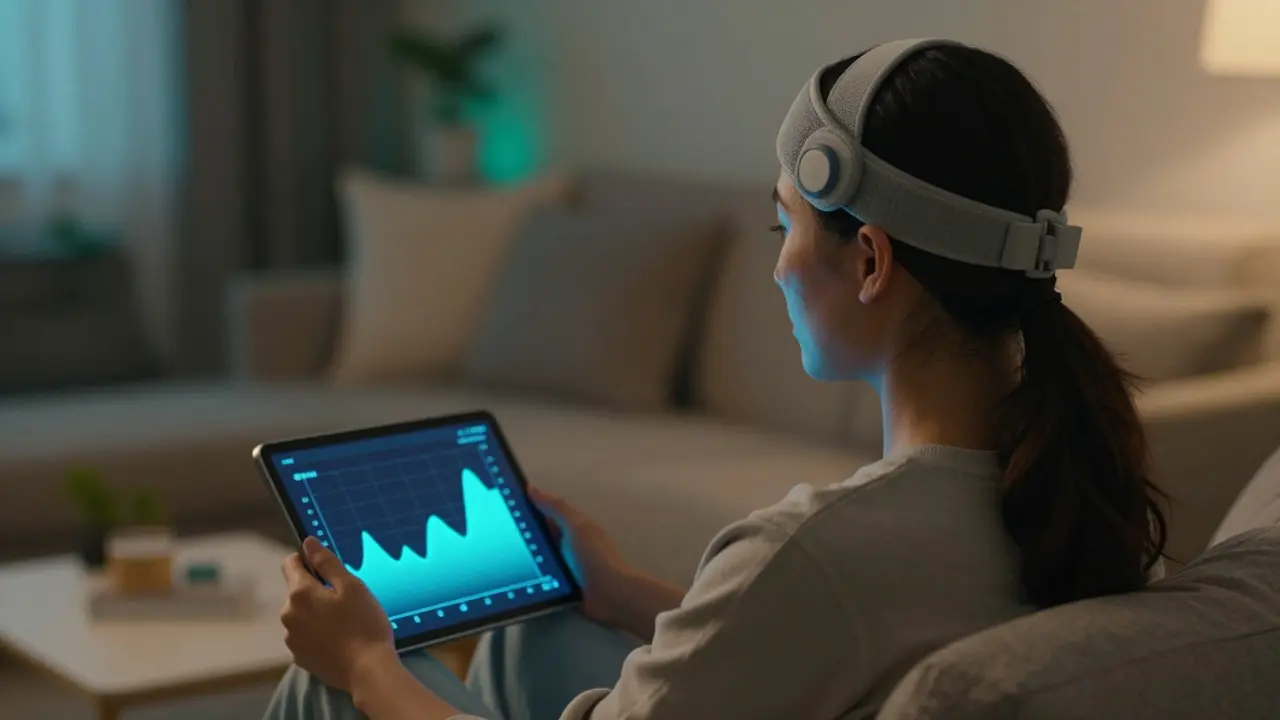
What if you could calm your racing heart just by thinking about it? Or lower your blood pressure without pills? This isn’t magic. It’s biofeedback - a proven method that turns your body’s hidden signals into something you can see, understand, and change.
What Biofeedback Actually Is
Biofeedback is a technique that uses sensors to measure things your body does automatically - like heart rate, muscle tension, skin temperature, and brainwaves. These signals are displayed on a screen in real time, so you can learn how to influence them with your thoughts.
It’s not about forcing your body to behave. It’s about learning the connection between your mind and your physical state. Think of it like a fitness tracker for your nervous system. Instead of just counting steps, it shows you how stress is tightening your shoulders or how deep breathing slows your pulse.
Studies from the American Psychological Association show biofeedback works best for conditions tied to stress: chronic headaches, high blood pressure, anxiety, and even some types of incontinence. It’s not a cure-all, but for people who’ve tried medication and still feel out of control, it’s a game-changer.
How It Works: The Science Behind Mind Over Body
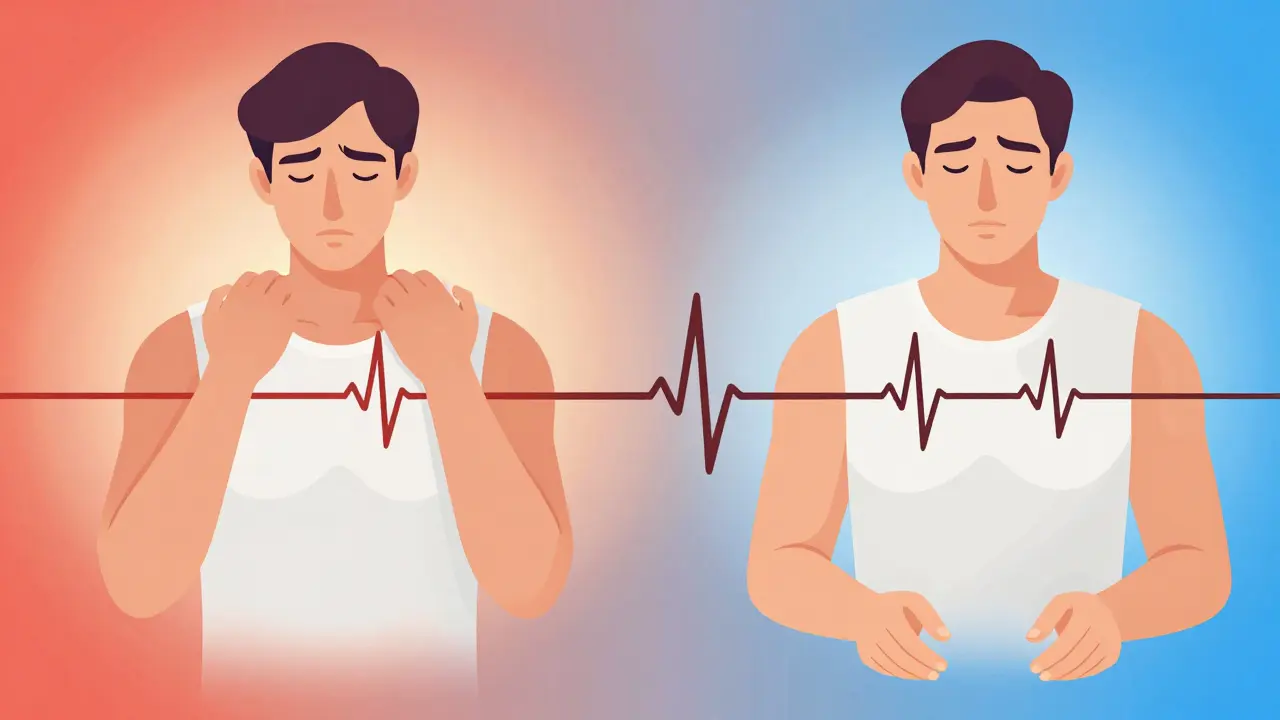
Your body runs on autopilot. When you’re stressed, your sympathetic nervous system kicks in - heart races, muscles tense, breath gets shallow. That’s fight-or-flight mode. But here’s the key: your parasympathetic nervous system, the rest-and-digest side, can be trained to kick in faster.
Biofeedback gives you a live readout of what’s happening inside. For example, if you’re holding tension in your forehead, a sensor picks up the electrical activity in those muscles. You see the line on the screen spike. Then you try relaxing. You breathe. You imagine warmth in your hands. And you see the line drop. That’s feedback. Your brain learns: when I do this, my body responds this way.
It’s operant conditioning - the same principle used to train dogs, but applied to your own physiology. You get rewarded with visual or auditory cues when you succeed. Over time, your brain rewires itself to make those calm states easier to reach, even without the machine.
Common Types of Biofeedback
Not all biofeedback is the same. Different sensors track different signals. Here are the most common types used in clinics and home devices:
- Electromyography (EMG): Measures muscle tension. Used for headaches, back pain, and jaw clenching.
- Thermal biofeedback: Tracks skin temperature. Cold hands often mean stress. Learning to warm them helps with Raynaud’s and anxiety.
- Heart rate variability (HRV): Shows how your heart rhythm changes with breathing. High HRV = better stress resilience. Popular with athletes and people with PTSD.
- Neurofeedback (EEG): Monitors brainwave patterns. Used for ADHD, insomnia, and epilepsy. Not the same as meditation apps - this is clinical-grade brain mapping.
- Galvanic skin response (GSR): Measures sweat gland activity. Tells you when your nervous system is activated, even if you don’t feel it.
Most people start with EMG or HRV because they’re the most straightforward. You don’t need to be a scientist to understand whether your shoulders are tight or your heart is steady.
What You Can Actually Achieve
Biofeedback isn’t about becoming a superhero. It’s about reclaiming control over small, daily moments of stress.
- Chronic tension headaches: A 2022 review in Headache: The Journal of Head and Face Pain found 70% of participants reduced headache frequency by half after 10 biofeedback sessions.
- Anxiety and panic attacks: People who use HRV biofeedback report fewer panic episodes and less dread between attacks. They learn to spot the early physical signs - a quickened pulse, shallow breath - and interrupt them before the panic takes over.
- High blood pressure: A study in the Journal of Human Hypertension showed participants lowered their systolic pressure by an average of 12 mmHg after 8 weeks of thermal and HRV training - comparable to some medications.
- Sleep issues: If your body stays in fight-or-flight mode at night, biofeedback helps you switch off. Many users report falling asleep faster and waking up less often.
These aren’t vague improvements. They’re measurable, repeatable changes. And they happen without drugs, side effects, or expensive equipment.
How to Get Started
You don’t need to join a clinic to try biofeedback. But you do need to start smart.
- Identify your goal. Are you dealing with stress? Insomnia? Jaw pain? Pick one thing to focus on. Trying to fix everything at once doesn’t work.
- Choose your tool. For beginners, a simple heart rate variability app like HeartMath or Elite HRV works well. They connect to your phone’s camera or a chest strap. EMG bands for tension are also available online for under $50.
- Practice daily. Ten minutes a day, five days a week, is enough to start seeing results. Consistency matters more than duration.
- Track progress. Write down how you felt before and after each session. Did your shoulders relax? Did your mind quiet? These notes help you see patterns.
- Consider professional help. If you’re dealing with chronic pain, PTSD, or severe anxiety, work with a licensed therapist trained in biofeedback. They can tailor the approach and interpret data you might miss.
Most people notice small changes within two weeks. By six weeks, many say they feel more in control - not just during sessions, but in traffic, at work, during arguments.
What Doesn’t Work
Biofeedback isn’t a quick fix. And it’s not for everyone.
- It won’t work if you’re not willing to pay attention. If you’re scrolling on your phone while the app tells you to breathe, you’re not practicing - you’re wasting time.
- It’s not a replacement for medical care. If you have high blood pressure, don’t quit your meds because your HRV improved. Talk to your doctor.
- It’s not meditation. Meditation is about letting go. Biofeedback is about learning. You’re actively trying to change something, not just observe it.
- It won’t fix trauma alone. If your body stays tense because of past trauma, biofeedback can help you feel safer in your skin - but you’ll likely need therapy too.
People who give up after one or two sessions usually don’t understand how learning works. It’s like trying to play piano after one lesson. Progress is slow at first. Then it clicks.
Real-Life Example: Sarah’s Story
Sarah, 42, worked in emergency nursing. She had migraines three times a week. Painkillers stopped working. Her doctor suggested biofeedback.
She started with an EMG headband. At first, she couldn’t relax her forehead muscles - they stayed tight even when she thought she was calm. The screen showed spikes every time she thought about work.
After three weeks, she noticed something: when she pictured herself walking on a beach, her muscle tension dropped. She started using that image before her shifts. Within two months, her migraines dropped from three times a week to once a month. She still uses the device twice a week - not because she needs to, but because she likes feeling in control.
Is Biofeedback Right for You?
Ask yourself these questions:
- Do you feel like your body is working against you - racing heart, clenched jaw, tight shoulders - even when nothing bad is happening?
- Have you tried relaxation techniques but felt like they didn’t stick?
- Are you tired of relying on medication for symptoms that keep coming back?
- Do you want to understand your body, not just suppress its signals?
If you answered yes to any of these, biofeedback might be the missing piece. It doesn’t promise miracles. But it gives you tools - tools that work with your biology, not against it.
Where to Go From Here
Start small. Download a free HRV app. Sit quietly for five minutes. Watch your pulse rise when you think about a stressful email. Then breathe slowly. Watch it drop. That’s biofeedback. That’s your mind over your body.
You don’t need to be an expert. You don’t need to spend hundreds of dollars. You just need to pay attention - and believe that your body isn’t your enemy. It’s giving you signals. You just never learned how to listen.
Can biofeedback help with anxiety?
Yes. Biofeedback, especially heart rate variability training, helps people recognize the early physical signs of anxiety - like a faster heartbeat or shallow breathing - and learn to calm those responses before they spiral into a panic attack. Studies show it reduces both the frequency and intensity of anxiety episodes over time.
Do I need special equipment for biofeedback?
You can start with affordable apps that use your phone’s camera to measure heart rate variability. For muscle tension, basic EMG bands cost under $50. Clinical-grade devices are more precise but not necessary for beginners. The key isn’t the device - it’s consistent practice.
How long until I see results from biofeedback?
Most people notice small changes within two weeks of daily 10-minute sessions. Significant improvements - like fewer headaches or better sleep - usually appear after 4 to 8 weeks. Like learning an instrument, progress builds slowly but lasts.
Is biofeedback the same as meditation?
No. Meditation is about observing thoughts and sensations without changing them. Biofeedback is about actively changing physical responses using real-time data. You can use both together - meditation helps you relax, biofeedback shows you how.
Can children use biofeedback?
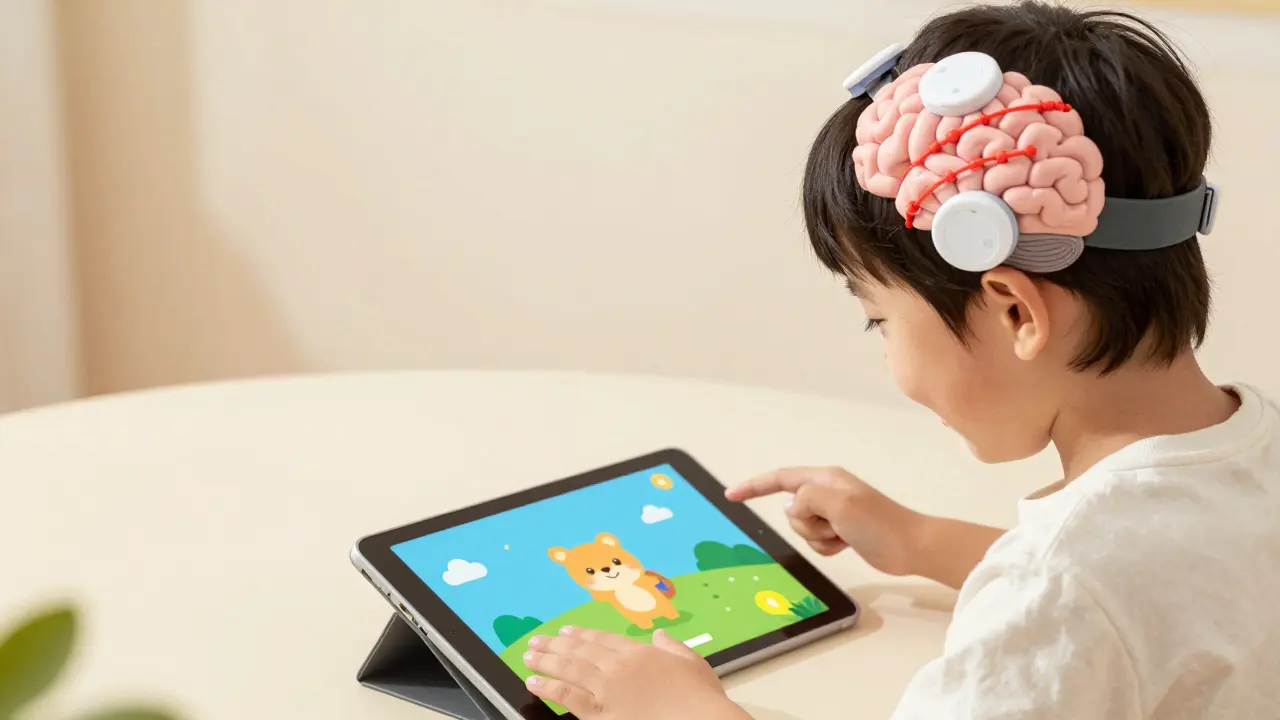
Yes. Biofeedback is used with children for ADHD, bedwetting, and anxiety. Games and visual feedback make it engaging for kids. A 2021 study in the Journal of Attention Disorders showed improved focus and reduced impulsivity in kids using neurofeedback over 12 weeks.