Understanding Your Options: A Guide to Meditation Styles
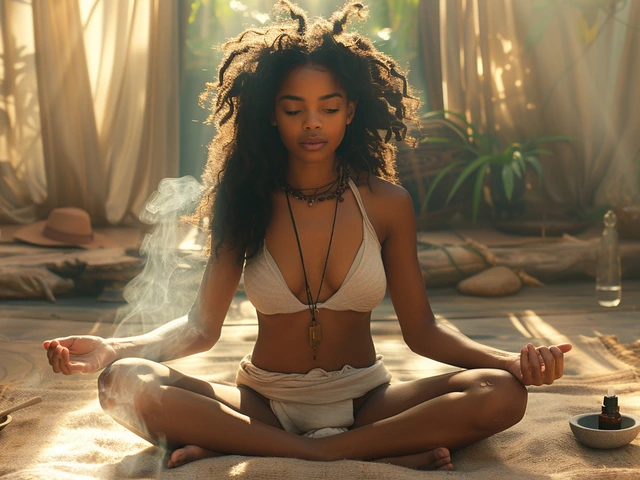
Meditation practices have exploded in popularity over the last decade, yet walking into a class or downloading an app often leaves people confused. You sit down, close your eyes, and wonder if you are doing it right. One person focuses on their breath while another chants mantras, and both claim inner peace. The reality is there isn't just one way to meditate. Different styles target different goals, whether that’s sharpening focus, calming anxiety, or connecting with spirituality.
In this guide, we break down the most common methods used today. We look at ancient traditions alongside modern adaptations that fit into busy schedules. By understanding the mechanics behind each style, you can stop guessing and start practicing with intention. Let’s look at what actually happens when you choose a specific path.
The Foundation of Contemplative Practice
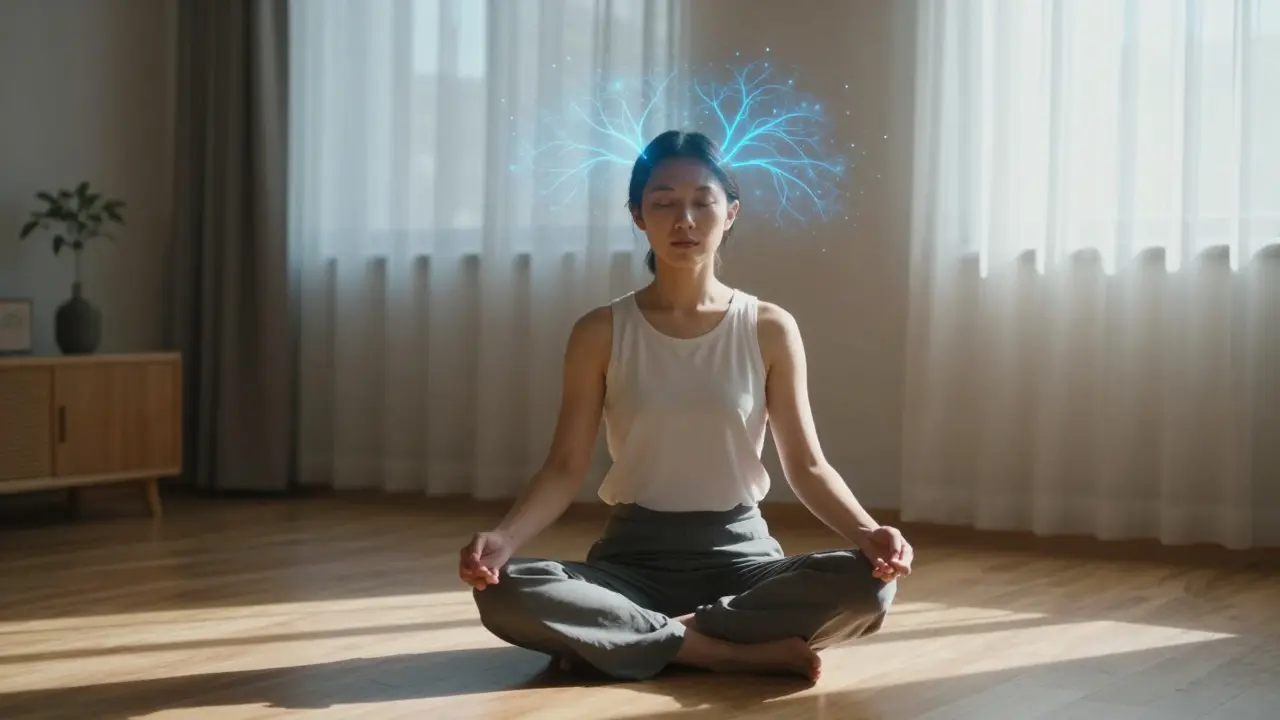
Before picking a specific technique, it helps to understand what meditation actually does to your brain. While many view it as simply "relaxing," the biological impact is much deeper. Regular practice changes neural pathways. Studies show increased grey matter density in areas linked to learning and memory. It also lowers cortisol levels, the hormone responsible for stress responses.
Mindfulness is the most well-known component here. It involves paying attention to the present moment without judgment. However, mindfulness is just one tool in the box. Other forms might involve visualisation, repetition of sounds, or even movement. Contemplative practice is the umbrella term covering these activities.
If you imagine your mind as a radio, standard living keeps multiple stations playing loudly at once. Meditation helps you tune the dial to one frequency. Depending on which style you pick, you might turn down the noise entirely, listen to the static, or change the station completely.
Ancient Roots: Traditional Styles
Many methods trace back thousands of years. These traditions have been refined through observation and cultural evolution. They offer structured frameworks rather than casual suggestions.
Vipassana and Observation
Vipassana is often described as insight meditation originating from ancient Indian traditions. The word means "to see things as they really are". Practitioners sit silently and observe bodily sensations. When pain or discomfort arises, instead of reacting, you watch how it moves. This builds emotional resilience.
This style requires significant time commitment. Retreats often last ten days of silence. In everyday life, a shorter version involves sitting for fifteen minutes and focusing purely on the sensation of breathing entering and leaving your nostrils. It is excellent for those who struggle with overthinking because it anchors you in physical reality.
Zen Buddhism and Zazen
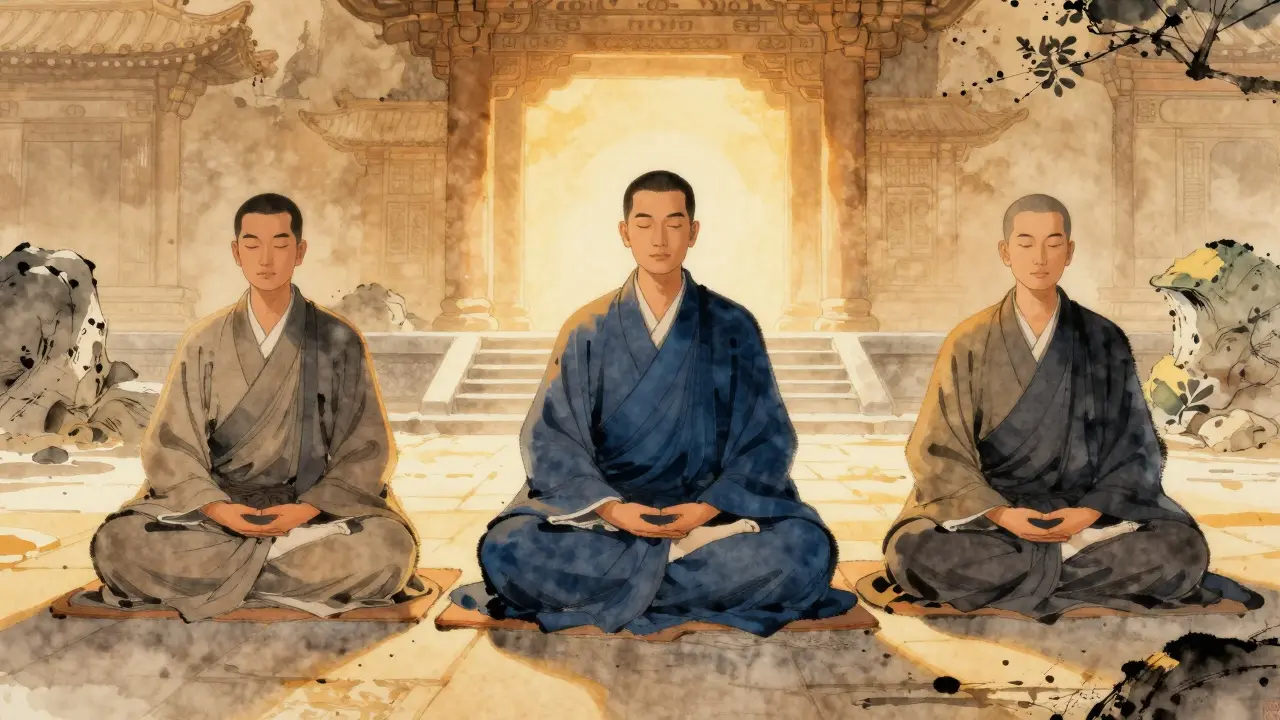
Zen Meditation, also known as Zazen, focuses on seated posture and awareness. Unlike other forms where you chase a specific goal, Zen emphasises doing nothing in a state of alert stillness.
You sit with your back straight and count your breaths to maintain focus. If thoughts drift, you notice the drifting and return to counting. It is deceptively simple but difficult to master. The lack of instruction allows the mind to settle naturally without external guidance. People in high-pressure jobs often prefer this because it teaches detachment from immediate impulses.
Transcendental Meditation
Transcendental Meditation, or TM, differs significantly. It uses a personal mantra assigned by a teacher. You do not focus on breath or objects. Instead, you repeat the sound silently to rest the mind deeply.
This method is trademarked and requires formal instruction. Supporters argue it reduces stress faster than generic methods. It fits individuals who struggle with finding a quiet mind on their own. The structure provides security for beginners worried about "doing it wrong." Critics point out the cost, which can be higher than community-based approaches.
Modern Adaptations for Busy Lives
Traditional retreats aren't feasible for everyone working full-time in cities like Brisbane. Modern adaptations strip away religious elements and focus on health outcomes. These are designed for twenty-first-century constraints.
Mindfulness-Based Stress Reduction
Mindfulness-Based Stress Reduction, or MBSR, was developed in the 1970s. It combines mindfulness techniques with cognitive behavioural strategies. Dr. Jon Kabat-Zinn created it for patients suffering chronic illness.
This approach treats meditation as a clinical intervention. Courses typically run for eight weeks. Participants track how thoughts affect their mood. You might scan your body for tension three times a day. Medical professionals often recommend this for anxiety management. It bridges the gap between spiritual practice and medical therapy.
Guided Meditation and Audio Support
Many people cannot sit alone with their thoughts. Guided sessions provide a voice to follow. Audio Visualisation takes you on mental journeys. You might picture a beach or a forest. The narrative gives your brain a task, preventing boredom.
Digital platforms have made this incredibly accessible. Apps release new daily sessions. While purists argue audio distracts from internal awareness, it works effectively as an entry point. Once comfortable, many users transition to silent practice. For someone recovering from trauma, having a supportive voice can feel safer than silence.
Physical and Sensory Approaches
Sitting still isn't mandatory. Some modalities integrate movement or sound to achieve altered states of consciousness.
Walking Meditation
Walking is one of the easiest ways to enter a meditative state without special equipment. You slow your pace drastically. Focus on the contact of your feet with the ground. Feel the heel lift, then the toe push. When you get distracted by passing cars or birds, bring focus back to the feet.
This solves the problem of physical restlessness. If sitting cross-legged hurts your knees or back, walking offers a viable alternative. It connects internal awareness with the external environment. You remain open to surroundings while maintaining a steady anchor.
Yoga Nidra
Yoga Nidra translates to yogic sleep. It is a form of deep relaxation done lying down. Unlike regular meditation, you stay awake but allow your body to sink into total calm.
Practitioners lie on their backs and rotate awareness through body parts sequentially. It induces theta brain waves, similar to the state before falling asleep. Athletes and students use it for performance recovery. It is highly effective for insomnia sufferers who cannot turn off their minds at night.
Mantra Meditation
Beyond Transcendental Meditation, general mantra chanting exists across cultures. Repeating a sound vibrates vocal cords and regulates breath. It occupies the verbal centre of the brain. Instead of fighting intrusive thoughts, you replace them with a chosen phrase like "peace" or "om." This rhythmic repetition creates a lullaby effect for the nervous system.
Comparing Techniques for Your Goals
Selecting the right path depends on what you want to achieve. Are you trying to sleep better? Do you want to solve creative blocks? Or is your main aim stress reduction?
| Type | Primary Focus | Ideal For | Time Required |
|---|---|---|---|
| Vipassana | Breath & Sensation | Deep Insight | 10-30 Minutes |
| Transcendental | Mantra Repetition | Stress Relief | 20 Minutes Twice Daily |
| MBSR | Mindful Awareness | Anxiety & Pain | 45 Minutes Daily |
| Walking | Movement & Grounding | Restless Bodies | Flexible Duration |
| Yoga Nidra | Deep Relaxation | Sleep & Recovery | 20-45 Minutes |
Notice the difference in structure. Some require strict discipline, others demand flexibility. There is no single best method universally. Consistency matters more than the specific brand of meditation. A five-minute practice every morning beats a forty-five-minute session once a month.

Common Challenges in Early Practice
When you start, difficulties arise. This is normal. The biggest issue is usually expectation. People expect instant bliss. Instead, they encounter frustration. Their mind wanders constantly. This feels like failure.
Reframing the experience helps. Catching yourself thinking is the actual exercise. The act of returning attention strengthens the "focus muscle". Just like going to the gym causes soreness before strength appears, early meditation feels hard before it gets easy. Boredom also sets in. This signals the habit loop forming.
Pain is another barrier. Sitting for long periods strains legs and back. Use cushions or chairs. Adjust posture until comfortable. If you cannot sit still, switch to walking or lying down variants. Adapting the environment removes unnecessary barriers to habit formation.
How to Start Today
You don't need a retreat centre to begin. Clear a small corner of your space. Sit comfortably. Set a timer for five minutes. Pick one method from above. Try Vipassana first as it needs minimal equipment. If that feels too intense, move to Guided Meditation.
Track your progress. Write down how you feel afterwards. Over time, patterns emerge showing what helps your specific personality type. Stick with one style for a few months before switching. Mixing too soon prevents depth. As you explore **meditation practices**, treat the process as a discovery journey rather than a checklist.
Is meditation religious?
Not necessarily. While roots exist in Eastern religions, secular techniques like MBSR focus on mental health and biology without spiritual dogma.
How long should I meditate each day?
Five minutes is a great starting point. Build up to twenty minutes as your attention span improves. Consistency outweighs duration.
Can I meditate if my mind won't stop racing?
Yes. Acknowledging thoughts is part of the process. Trying to force silence often makes it worse. Observe the thoughts like clouds passing.
What is the difference between mindfulness and meditation?
Meditation is the dedicated practice session. Mindfulness is the skill of awareness developed through meditation that applies to daily activities.
Does yoga nidra help with sleep issues?
Yes, it is widely used for insomnia because it guides you into a deep relaxation state similar to sleep onset.