

Most of us treat breakfast like an afterthought. We grab a coffee on the run, maybe swipe a croissant if we’re feeling generous, and call it a day. But that rushed start sets a biological tone for the next twelve hours. If you want steady energy, clear focus, and a metabolism that doesn’t crash by 11 AM, what you eat in the first hour of waking matters more than almost anything else.
The secret isn’t complicated. It’s not about expensive superfoods or spending forty minutes chopping vegetables before work. It’s about balance. Specifically, balancing protein, fiber, and healthy fats to keep your blood sugar stable. When you get this ratio right, you stop snacking out of hunger and start eating out of choice. Here is how to build a morning meal that actually works for real life.
The Science Behind the Morning Plate
Why does a sugary cereal make you feel tired two hours later? It comes down to glucose spikes. When you eat carbohydrates without enough protein or fat, your body dumps insulin into your bloodstream to manage the sugar rush. This causes a rapid drop in blood sugar shortly after, leading to brain fog, irritability, and cravings. This is often called the "post-breakfast slump."
To avoid this, you need to slow down digestion. Fiber from vegetables and whole grains, along with protein from eggs or dairy, creates a buffer. This ensures nutrients are released slowly into your system. Think of it as burning wood instead of paper; wood lasts longer and provides consistent heat, while paper flares up quickly and turns to ash. Your goal is the slow burn.
A study published in the American Journal of Clinical Nutrition highlighted that high-protein breakfasts significantly reduce hunger hormones like ghrelin throughout the morning. This means you’re less likely to overeat at lunch. You aren’t just feeding your stomach; you’re regulating your hormonal response to food.
The Three Pillars of a Balanced Breakfast
You don’t need a nutritionist to calculate macros. Just aim for these three components on every plate:
- Protein: This is the anchor. Aim for at least 20 grams. Good sources include eggs, Greek yogurt, cottage cheese, tofu, or a scoop of protein powder. Protein keeps you full and preserves muscle mass.
- Fiber: This aids digestion and stabilizes blood sugar. Include berries, chia seeds, oats, spinach, or half an avocado. Aim for 5-10 grams of fiber in your morning meal.
- Healthy Fats: These support brain health and satiety. Add a handful of almonds, walnuts, flaxseeds, or use olive oil in your cooking. Avoid trans fats found in many processed pastries.
If your breakfast has only carbs (like toast or fruit alone), add protein. If it’s mostly fat (like buttered toast), add fiber and protein. Completing this triangle prevents energy crashes.
Quick Healthy Breakfast Ideas for Busy Mornings
Time is the biggest barrier to healthy eating. Here are five realistic options that take less than ten minutes to prepare, perfect for a Brisbane summer morning or a winter commute.
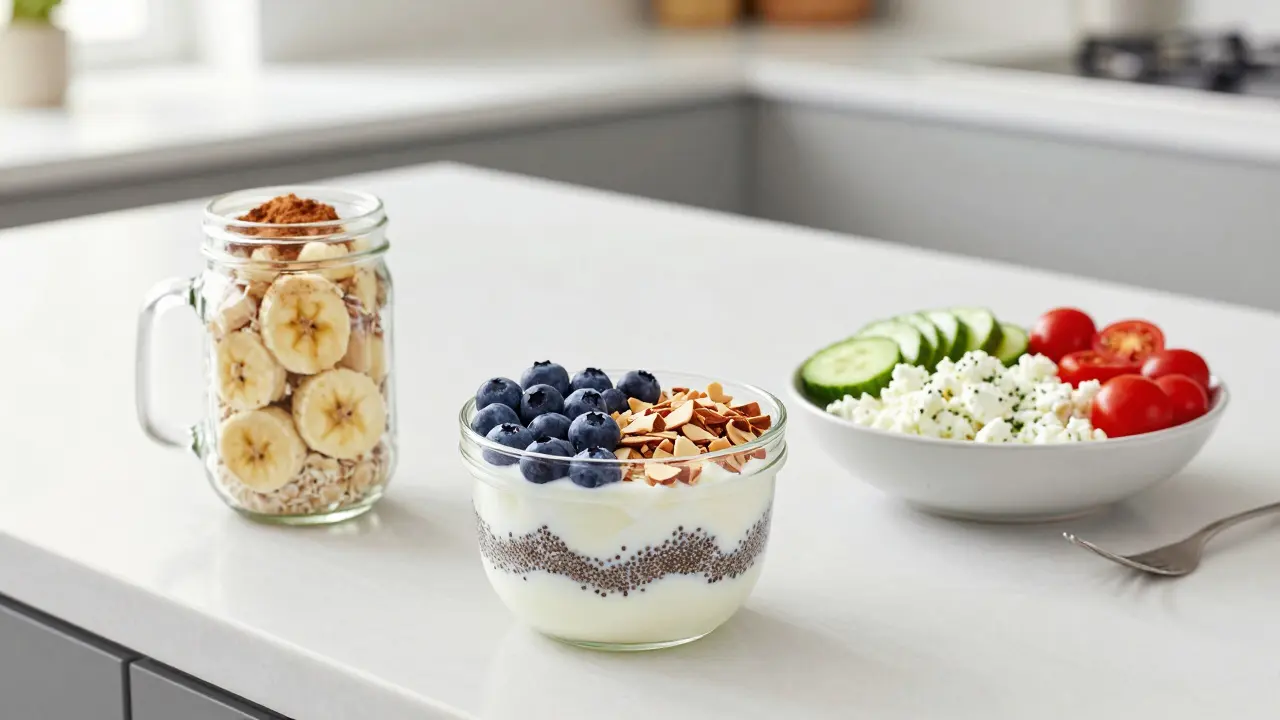
- Greek Yogurt Parfait: Mix 150g of plain Greek yogurt with a tablespoon of chia seeds and a cup of mixed berries. Top with crushed almonds. This gives you roughly 20g of protein and plenty of antioxidants.
- Overnight Oats: Combine rolled oats, milk (or almond milk), a scoop of protein powder, and cinnamon in a jar the night before. In the morning, just stir and go. Add sliced banana for extra potassium.
- Veggie Scramble: Whisk two eggs with a handful of spinach and diced bell peppers. Cook in a non-stick pan with a little olive oil. Serve with half an avocado. High volume, low calorie, high satisfaction.
- Cottage Cheese Bowl: Scoop 1/2 cup of cottage cheese into a bowl. Top with cucumber slices, cherry tomatoes, and everything bagel seasoning. It sounds savory, but it’s incredibly filling and tastes like a light snack rather than a heavy meal.
- Smoothie with Substance: Blend one frozen banana, a handful of kale, 1/4 cup of hemp seeds, and unsweetened soy milk. Hemp seeds provide complete protein and omega-3 fatty acids, making this more than just fruit juice.
The key here is preparation. Keep your oats measured in jars and your veggies pre-chopped. If it takes more than five minutes to assemble, you won’t do it on a Tuesday when you’re running late.
What to Avoid: Hidden Sugar Traps
Many foods marketed as "healthy" breakfasts are essentially dessert in disguise. Flavored yogurts, granola bars, and fruit juices are common culprits. A single serving of flavored yogurt can contain as much sugar as a candy bar. Granola, while made with oats and nuts, is often bound together with honey or syrup, turning it into a dense carb bomb.
Read the labels. If sugar is in the top three ingredients, put it back. Look for "unsweetened" or "plain" versions and add your own sweetness with fresh fruit or a dash of cinnamon. Whole fruits are fine because the fiber slows absorption, but fruit juice strips away that fiber, leaving pure sugar that hits your bloodstream instantly.
| Breakfast Item | Protein (approx.) | Fiber (approx.) | Sugar Content | Energy Stability |
|---|---|---|---|---|
| Plain Greek Yogurt + Berries | High (15-20g) | Medium (4-6g) | Low (Natural only) | Stable |
| Sugary Cereal + Milk | Low (5-8g) | Low (2-3g) | Very High (Added sugars) | Crash within 2 hours |
| Pastries/Croissants | Very Low (<3g) | Very Low (<1g) | High (Refined carbs/fat) | Rapid spike then drop |
| Eggs + Avocado Toast | High (15g+) | Medium (5-7g) | None | Very Stable |
Hydration: The Forgotten First Step
Before you eat anything, drink water. After seven hours of sleep, your body is mildly dehydrated. Dehydration mimics hunger and causes fatigue. Drinking a large glass of water upon waking kickstarts your metabolism and helps your kidneys filter waste products accumulated overnight.
If you rely on caffeine, wait until after you’ve eaten. Consuming coffee on an empty stomach can increase cortisol levels, leading to jitters and anxiety. Pairing your coffee with a protein-rich meal buffers this effect, allowing you to enjoy the alertness without the crash.

Tailoring Breakfast to Your Lifestyle
Your ideal breakfast depends on your activity level. If you exercise in the morning, you might benefit from a slightly higher carbohydrate intake to fuel performance. For example, adding a slice of whole-grain bread to your eggs provides quick energy for a workout. However, if your morning is sedentary-mostly desk work-a lower-carb, higher-fat and protein meal is better suited to maintain mental clarity without digestive heaviness.
Listen to your body. Some people thrive on intermittent fasting and skip breakfast entirely. That’s fine if you feel good and meet your nutritional needs later in the day. But if you feel hungry, shaky, or unfocused by mid-morning, skipping breakfast is costing you productivity. There is no one-size-fits-all rule, only what works for your physiology.
Practical Tips for Success
Habit formation is harder than meal prep. To stick with healthy breakfasts, remove friction. Lay out your gym clothes or prep your smoothie ingredients the night before. Keep healthy snacks visible and junk food hidden. If you have to think about what to eat, you’ll default to convenience. Make the healthy choice the easiest choice.
Start small. Don’t overhaul your entire diet overnight. Swap one sugary habit for a protein-rich alternative. Replace your morning muffin with a hard-boiled egg and an apple. Once that feels normal, adjust again. Consistency beats intensity every time.
Is it bad to skip breakfast?
Not necessarily. Intermittent fasting is a valid dietary strategy for some people. However, if skipping breakfast leads to overeating later, poor food choices, or low energy during work hours, it may not be beneficial for you. Listen to your hunger cues and observe how your body performs throughout the day.
How much protein should I have for breakfast?
Aim for at least 20 grams of protein. This amount has been shown to maximize satiety and reduce hunger hormones. Examples include two eggs with cheese, a cup of Greek yogurt, or a protein shake with milk.
Can I drink fruit juice for breakfast?
It’s better to eat whole fruit. Juice lacks fiber, which means the sugar enters your bloodstream rapidly, causing a spike and subsequent crash. If you must drink juice, dilute it with water and pair it with a source of protein or fat to slow absorption.
What is the best breakfast for weight loss?
There is no magic food, but high-protein, high-fiber meals tend to support weight loss best. They keep you full longer, reducing overall calorie intake throughout the day. Foods like eggs, oatmeal with berries, and vegetable omelets are excellent choices.
Does breakfast really boost metabolism?
Eating breakfast breaks the overnight fast and signals your body to start burning calories. While the metabolic boost itself is modest, the main benefit is behavioral: a good breakfast prevents extreme hunger later, which reduces the likelihood of bingeing or choosing unhealthy convenience foods.