Healthy Plate Builder
Build a balanced meal following the 50-25-25-5 plate model from the article. Drag and drop food items into the correct sections to see if you've achieved the right balance.
Food Categories
Vegetables & Fruits
Whole Grains
Protein
Healthy Fats
Your Meal Balance
Veggies: 0%
Grains: 0%
Protein: 0%
Fats: 0%
What if the food you eat every day could be the single biggest factor in how you feel-mentally, physically, and emotionally? It’s not magic. It’s science. A healthy diet doesn’t mean cutting out all your favorite foods or surviving on kale smoothies. It’s about building a relationship with food that supports your body, not fights it.
What a Healthy Diet Actually Looks Like
A healthy diet isn’t a trend. It’s not the latest detox or juice cleanse. Real healthy eating is consistent, flexible, and rooted in whole, minimally processed foods. The World Health Organization calls it a pattern that includes fruits, vegetables, whole grains, legumes, nuts, and lean proteins. That’s it. No fancy labels. No expensive supplements.
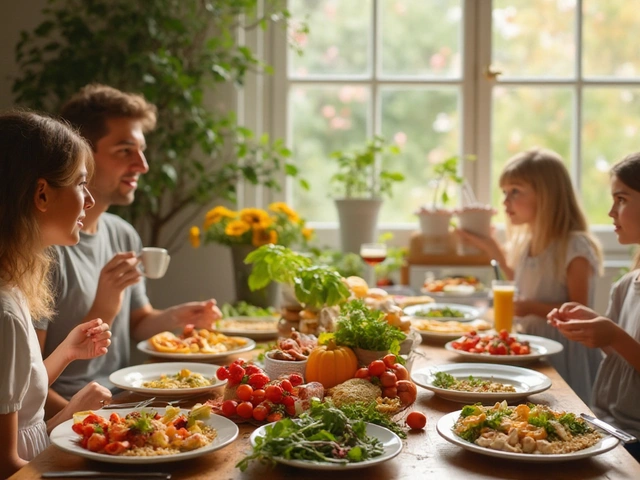
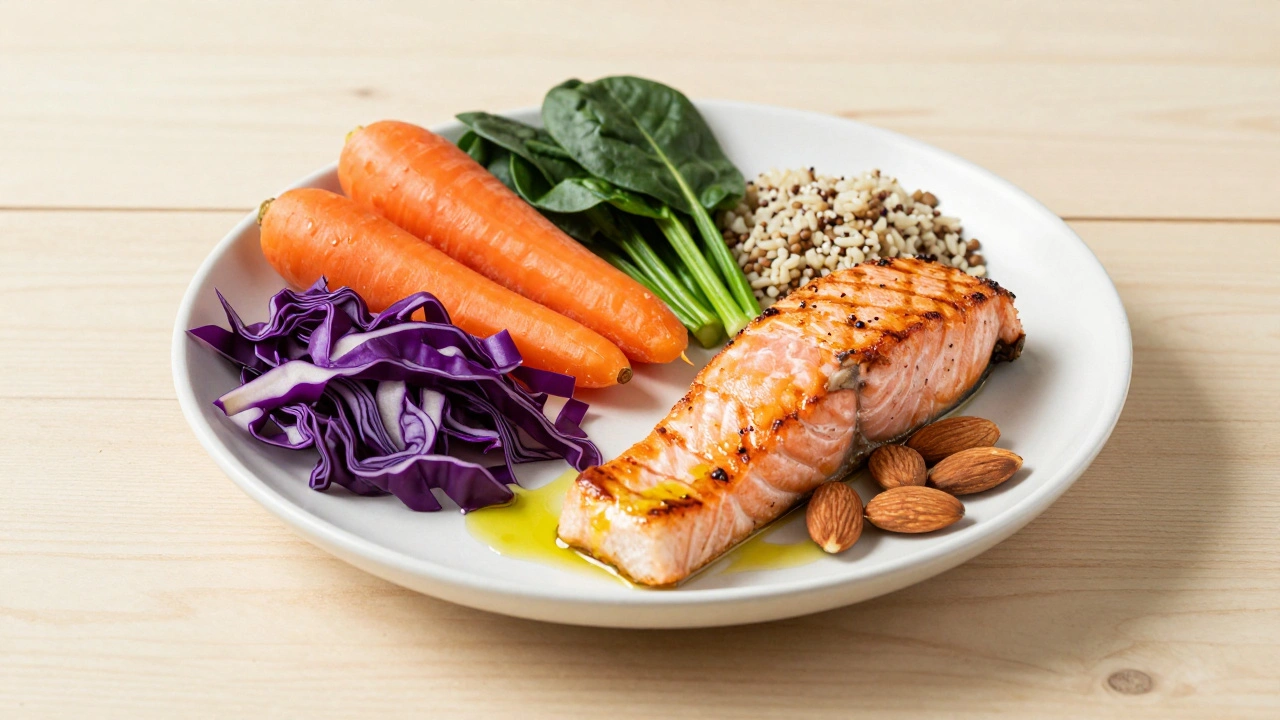
Think about your plate. Half should be colorful vegetables and fruits. A quarter should be whole grains like brown rice, quinoa, or oats. The last quarter? Protein-beans, fish, eggs, tofu, or lean chicken. Add a small portion of healthy fats: avocado, olive oil, or nuts. That’s the baseline. No counting calories. No food police. Just balance.
Studies from the Harvard T.H. Chan School of Public Health show that people who follow this pattern have a 25% lower risk of heart disease and up to a 30% lower risk of type 2 diabetes. It’s not about perfection. It’s about consistency over months and years.
What to Eat More Of
- Vegetables and fruits - Aim for at least five servings a day. Different colors mean different nutrients. Purple cabbage, orange carrots, green spinach-they all play a role.
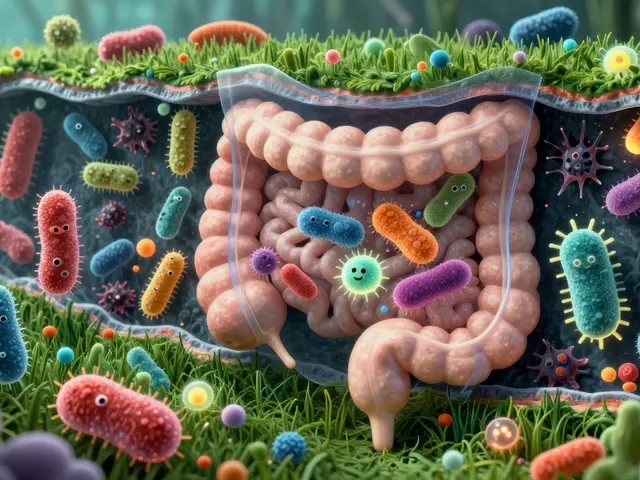
- Whole grains - Swap white bread and pasta for whole wheat, barley, buckwheat, or farro. They digest slower, keep you full longer, and feed good gut bacteria.
- Legumes - Beans, lentils, chickpeas. Cheap, filling, packed with fiber and plant-based protein. One cup of lentils gives you 18 grams of protein and 15 grams of fiber.
- Healthy fats - Olive oil, avocados, nuts, seeds, and fatty fish like salmon. These aren’t the enemy. They help your brain work, reduce inflammation, and keep your skin healthy.
- Water - Not soda, not sweetened tea, not energy drinks. Just water. The Institute of Medicine recommends about 3.7 liters for men and 2.7 liters for women daily, including water from food.
What to Cut Back On
You don’t have to eliminate these completely-but reducing them makes a real difference.
- Added sugar - Found in soda, candy, flavored yogurt, and even bread. The American Heart Association says men should have no more than 36 grams (9 teaspoons) per day, women no more than 25 grams (6 teaspoons). Most Americans eat twice that.
- Ultra-processed foods - Things with ingredients you can’t pronounce. Chips, frozen meals, packaged snacks, sugary cereals. These are designed to be addictive, not nourishing.
- Refined carbs - White bread, pastries, white rice. They spike blood sugar, then crash it. That’s why you feel tired and hungry again an hour after eating them.
- Trans fats - Still in some margarines and fried foods. They raise bad cholesterol and lower good cholesterol. The FDA banned them in 2018, but some products still sneak through.
Meal Planning That Actually Works
People think meal planning is time-consuming. It’s not-if you start simple.
Try this: Every Sunday, spend 30 minutes doing three things:
- Write down three dinners you’ll make during the week. Pick ones with overlapping ingredients-like beans, rice, and veggies.
- Make a grocery list based on those meals. Stick to it.
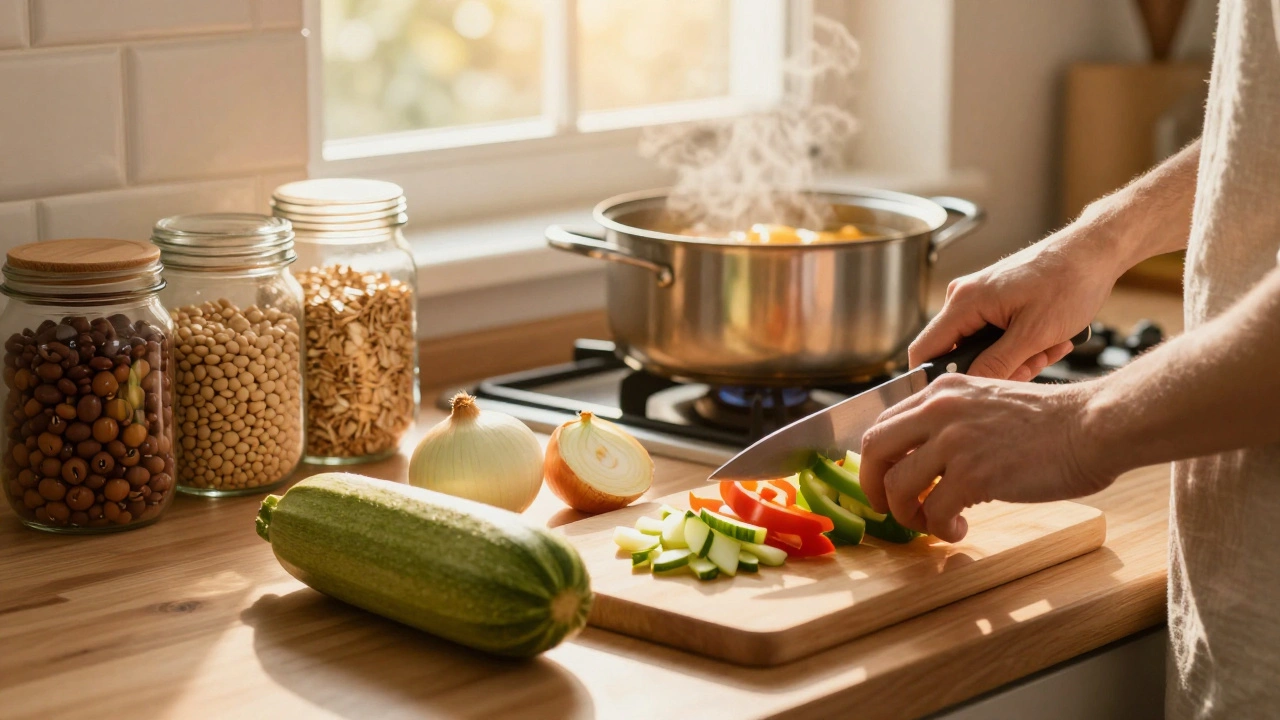
- Wash and chop one or two veggies. Store them in clear containers. Ready to toss into a stir-fry or salad.
That’s it. No need for elaborate spreadsheets or color-coded calendars. You’re not training for a marathon. You’re just making life easier.
Batch cooking helps too. Cook a big pot of lentil soup or quinoa salad. Eat it for lunch three days in a row. Freeze the rest. You’ll save time, money, and stress.
Real-Life Eating Habits That Stick
Here’s what works for real people-not influencers.
- Eat slowly - Put your fork down between bites. It takes 20 minutes for your brain to register fullness. Rushing meals leads to overeating.
- Don’t eat while distracted - No TV, no scrolling. Focus on your food. You’ll enjoy it more and eat less.
- Keep healthy snacks visible - Put apples and nuts on the counter. Hide the cookies in a high cabinet. Out of sight, out of mind works.
- Allow yourself treats - If you forbid chocolate, you’ll crave it more. Have a square. Savor it. Move on.
- Drink water before meals - Sometimes thirst feels like hunger. Drink a glass of water 15 minutes before eating. You might realize you weren’t hungry at all.
Common Mistakes (And How to Fix Them)
People try to change everything at once. That’s why diets fail.
Mistake: Cutting out carbs entirely.
Fix: Swap refined carbs for whole ones. You don’t need to give up bread-just choose whole grain.
Mistake: Believing you need expensive superfoods.
Fix: Spinach, beans, oats, and eggs are cheaper than protein powders and acai bowls. Nutrition doesn’t cost a fortune.
Mistake: Skipping meals to lose weight.
Fix: Skipping meals slows your metabolism and leads to overeating later. Eat regular, balanced meals-even if they’re small.
Mistake: Thinking healthy eating is boring.
Fix: Try new spices. Cumin, turmeric, paprika, garlic powder. They add flavor without salt or sugar. Experiment with recipes from different cultures. Mexican black bean soup, Indian dal, Mediterranean grain bowls-flavor is everywhere.
How Long Until You Notice a Difference?
People ask this all the time. The answer? Faster than you think.
- Within 3-5 days: Less bloating, more energy. Cutting sugar and processed foods reduces inflammation fast.
- By two weeks: Better sleep, fewer cravings. Your taste buds reset. Sweet foods start to taste too sweet.
- By four weeks: Clearer skin, improved digestion, steadier mood. Your gut microbiome starts to heal.
- By three months: Weight stabilizes naturally. Blood pressure and cholesterol often improve without medication.
You don’t need to wait a year to feel better. Small changes add up quickly.
What About Supplements?
Most people don’t need them. If you eat a variety of whole foods, you’re getting the nutrients your body needs.
There are exceptions:
- Vitamin D-if you live in a northern state, get little sun, or have dark skin.
- B12-if you’re vegan or vegetarian.
- Folic acid-if you’re pregnant or planning to be.
Don’t take supplements just because they’re on a billboard. Talk to a doctor if you’re unsure. Food is always better than pills.
It’s Not About Perfection
One pizza won’t ruin your health. One sugary coffee won’t undo months of good habits. Healthy eating isn’t about being flawless. It’s about making better choices most of the time.
Some days you’ll eat out. Some days you’ll grab a granola bar. That’s okay. What matters is the pattern over weeks and months. Your body doesn’t care about one bad meal. It cares about the sum of your choices.
Think of it like brushing your teeth. You don’t do it perfectly every day. But if you do it regularly, your teeth stay healthy. Same with food.
Where to Go From Here
Start with one change this week. Pick the easiest one:
- Swap soda for sparkling water with lemon.
- Add one vegetable to your dinner.
- Make your own oatmeal instead of buying flavored packets.
- Drink a glass of water before breakfast.
Do that for a week. Then pick another. Slow and steady wins the race. You’re not trying to transform overnight. You’re building a lifestyle that lasts.
Healthy eating isn’t a destination. It’s a daily practice. And the best part? You don’t need to be perfect to benefit. Just show up.
Can I still eat out on a healthy diet?
Yes. Choose grilled or baked options instead of fried. Ask for sauces on the side. Load up on vegetables. Skip the bread basket. Most restaurants offer healthier choices-you just need to know what to look for.
Is a healthy diet expensive?
Not if you focus on the right things. Beans, lentils, rice, oats, seasonal vegetables, and eggs are among the cheapest, most nutritious foods you can buy. Processed snacks and pre-packaged meals cost more and give you less. Buying in bulk and cooking at home saves money.
Do I need to be vegetarian to eat healthy?
No. You can eat a healthy diet with or without meat. Plant-based meals are great for health, but lean chicken, fish, and eggs also fit in. The key is variety and balance-not eliminating entire food groups unless you have a medical reason.
How much water should I really drink?
The standard recommendation is about 3.7 liters for men and 2.7 liters for women per day, including water from food. But thirst is a good guide. If you’re rarely thirsty and your urine is pale yellow, you’re likely drinking enough. Don’t force yourself to hit a number.
Can I lose weight with a healthy diet without exercising?
Yes. Weight loss happens when you eat fewer calories than you burn. A healthy diet naturally reduces calorie intake by cutting out sugary, processed foods and replacing them with filling, nutrient-dense options. Exercise helps with fitness and mood, but diet is the main driver of weight change.
What if I don’t like vegetables?
Try different cooking methods. Roasting brings out natural sweetness. Sautéing with garlic and olive oil adds flavor. Blend them into soups or sauces. Start with milder ones like zucchini, carrots, or bell peppers. Your taste buds can change over time-you just need to keep trying.