
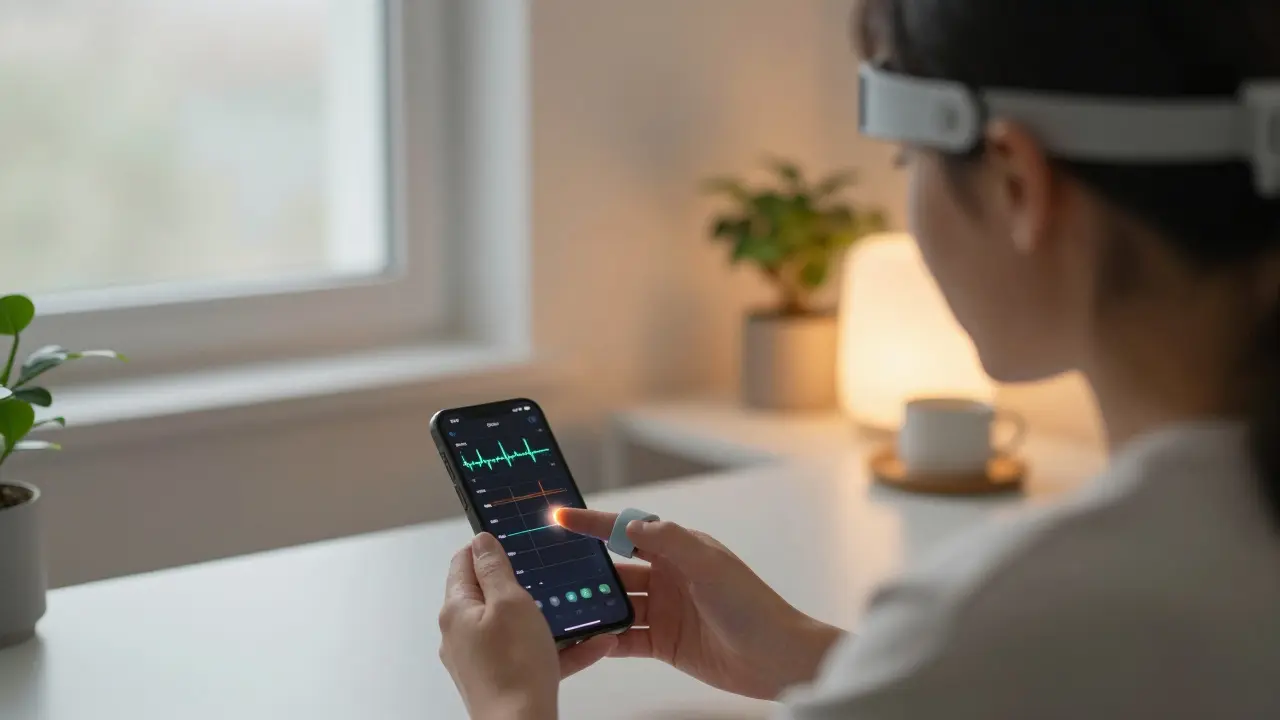
Most people think mental fitness is about thinking harder or meditating longer. But what if your brain needs real-time feedback-like a fitness tracker for your nervous system-to actually improve? That’s where biofeedback comes in. It’s not magic. It’s science. And it’s working for people who’ve tried everything else.
Imagine watching your heart rate spike during a work meeting, then seeing it drop by just breathing slower. Or noticing your forehead muscles tightening during a panic attack, and learning to relax them before it gets worse. Biofeedback turns invisible internal states into visible signals. You don’t guess what’s happening inside-you see it, feel it, and change it.
What Biofeedback Actually Does
Biofeedback uses sensors to measure your body’s automatic functions-things you can’t normally control. Things like heart rate, muscle tension, skin temperature, and brainwave patterns. These signals are displayed on a screen in real time. Over time, you learn to adjust them using simple mental techniques. No drugs. No needles. Just awareness and practice.
It’s not new. NASA used it in the 1960s to help astronauts manage stress in space. Today, hospitals use it for chronic pain, anxiety, and even ADHD. The key difference between biofeedback and meditation? Meditation asks you to quiet your mind. Biofeedback gives you a mirror to see what’s happening while you do it.
The Three Main Types You Can Try
Not all biofeedback is the same. Three types have the most evidence behind them for mental fitness:
- Heart Rate Variability (HRV) Biofeedback - Measures how your heart rhythm changes with breathing. Low HRV? That’s your body stuck in fight-or-flight mode. Training it improves emotional control and resilience.
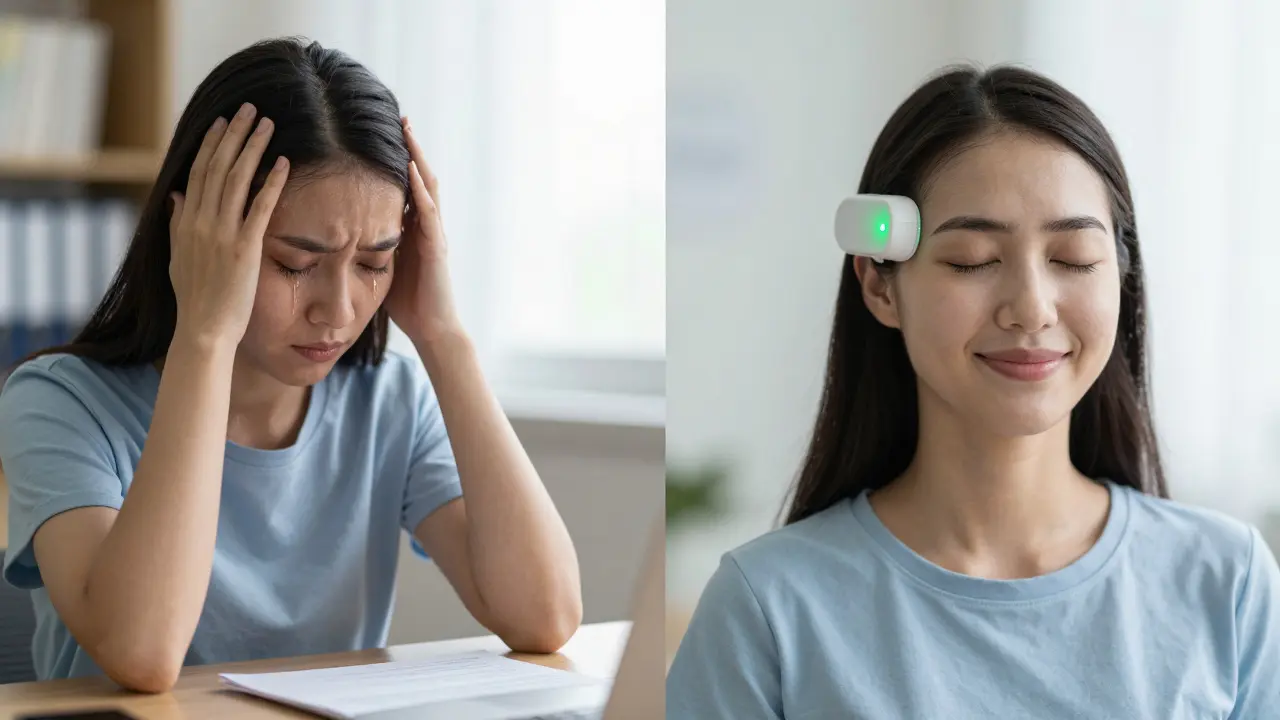
- Electromyography (EMG) Biofeedback - Tracks muscle tension, especially in the forehead, shoulders, and jaw. Most people hold tension without realizing it. This shows you exactly when and where.
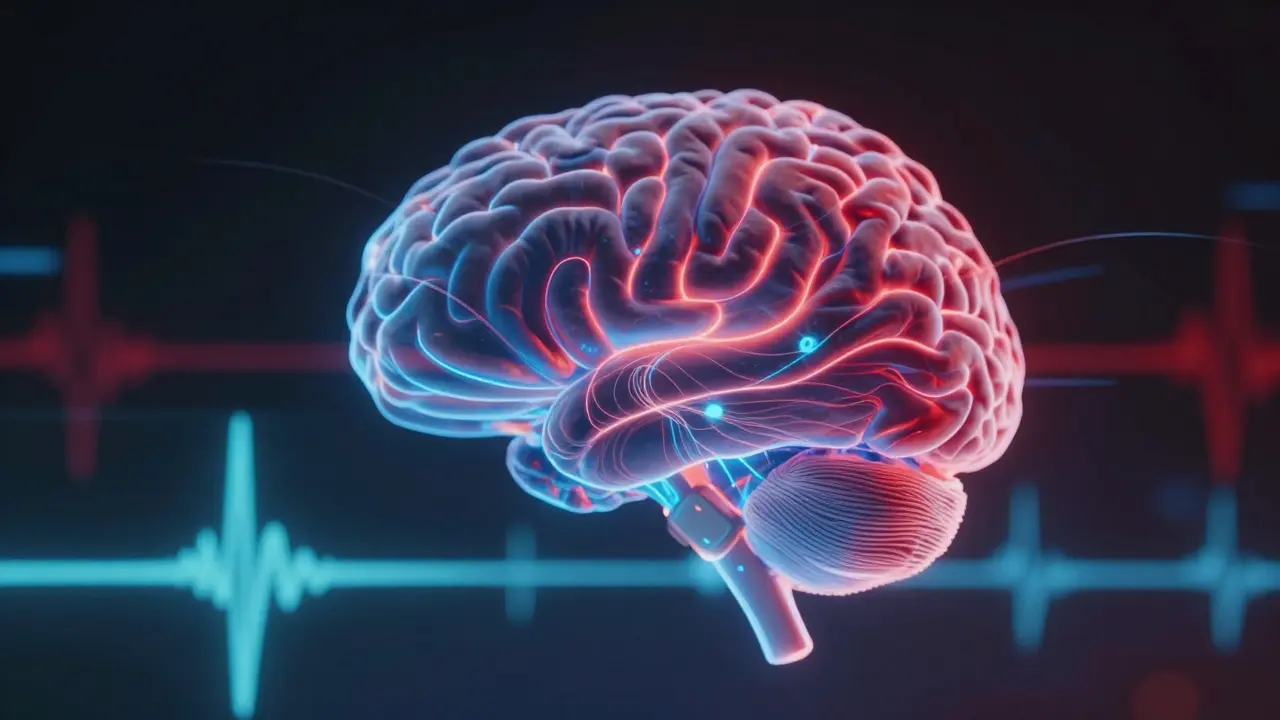
- Neurofeedback (Brainwave Training) - Uses EEG sensors to monitor brainwave patterns. Too much beta (overthinking)? Too little alpha (calm focus)? You learn to shift them.
HRV training is the easiest to start with. You can do it at home with a chest strap or finger sensor that connects to your phone. EMG needs a small device that clips to your forehead. Neurofeedback usually requires a clinic visit-but home systems are getting cheaper and better.
How It Works: A Real-Life Example
Anna, a teacher in Wellington, struggled with panic attacks before class. She tried breathing exercises, but they didn’t stick. Then she tried HRV biofeedback. Her device showed her heart rate spiking when she thought about speaking in front of students. She learned to breathe in for four seconds, hold for two, out for six. Every time her HRV improved on screen, she got a soft chime.
After three weeks, her panic attacks dropped by 80%. She didn’t just feel calmer-she could see it happening. That visual proof rewired her brain. She now uses it daily, even on days she feels fine. It’s like mental fitness training: you don’t wait until you’re out of shape to start.
What You Need to Get Started
You don’t need a lab. Here’s what works today:
- For HRV: A Bluetooth chest strap (like Polar H10) or a fingertip sensor (like Elite HRV or Biostrap). Pair it with a free app like Biofeedback Training or HeartMath.
- For EMG: A forehead sensor like the MyoScan Pro ($120). It connects to an app that shows muscle tension levels.
- For Neurofeedback: The Muse headband or the NeurOptimal system. Both give audio feedback when your brain shifts into calm states.
Most devices cost between $50 and $200. No subscription needed. You can start with a 10-minute session a day. The goal isn’t to be perfect-it’s to notice patterns. Did your tension go up after coffee? After scrolling at night? That’s the insight biofeedback gives you.
What Science Says
A 2023 meta-analysis in the Journal of Clinical Psychology reviewed 47 studies on biofeedback for anxiety and stress. Results? Participants saw a 40-60% reduction in symptoms after 8-12 sessions. Effects lasted at least six months. Comparable to cognitive behavioral therapy-but without the talk therapy component.
Another study from the University of Auckland tracked 120 people using HRV biofeedback for six weeks. 78% reported better sleep. 71% said they reacted less sharply to stress. 64% felt more in control of their emotions. No one reported side effects.
Why does it work? Because your brain learns by feedback. Just like learning to ride a bike, you don’t improve by thinking about balance-you improve by feeling it. Biofeedback gives your nervous system the data it needs to self-correct.
Common Mistakes to Avoid
People expect instant results. They don’t get them. Here’s what actually works:
- Don’t chase the perfect reading. Your goal isn’t to make your HRV go up every time. It’s to notice when you’re tense and gently shift.
- Don’t use it only when stressed. Practice when you’re calm. That’s when your brain learns the skill. Use it during lunch, before bed, or while waiting in line.
- Don’t compare your numbers to others. Everyone’s baseline is different. Your “good” HRV might be 50. Mine is 70. That’s okay.
- Don’t skip the breathing. The sensors show you what’s happening. Breathing, posture, and mental focus are what change it.
Who Shouldn’t Try It
Biofeedback is safe for almost everyone. But if you have:
- Severe epilepsy (especially with neurofeedback)
- A pacemaker or implanted defibrillator
- Active psychosis or dissociative disorders
-talk to your doctor first. Most people, though, can use it without risk. Even kids as young as 10 use it for anxiety and ADHD with great results.
How to Make It Stick
Like any habit, biofeedback fades if you don’t practice. Here’s how to keep it going:
- Set a daily alarm: 10 minutes after breakfast or before bed.
- Pair it with something you already do: brush your teeth, drink tea, sit in your favorite chair.
- Track progress weekly: Not in numbers-in how you feel. "I didn’t snap at my partner yesterday."
- Don’t wait for a crisis. Use it on good days too. That’s when the brain learns best.
After six weeks, most people stop needing the device. Their body remembers the rhythm. That’s the goal-not to depend on tech, but to use it as a teacher.
What Comes Next
Biofeedback doesn’t replace therapy, sleep, or movement. It enhances them. Use it alongside mindfulness, walking in nature, or reducing screen time. The best mental fitness routines combine awareness with action.
Think of it this way: if you want to build strength, you don’t just think about lifting weights. You lift them. Biofeedback is the weight for your nervous system. You’re not fixing something broken. You’re training something strong.
Can biofeedback help with anxiety?
Yes. Multiple studies show biofeedback, especially HRV and EMG, reduces anxiety symptoms by 40-60% after 8-12 sessions. It works by teaching your body to switch out of fight-or-flight mode. People report fewer panic attacks, less muscle tension, and improved sleep.
Do I need a professional to use biofeedback?
No. Many reliable devices are designed for home use. Apps like HeartMath, Elite HRV, and Muse give real-time feedback without needing a therapist. You can start for under $100. Professionals help if you have complex conditions, but most people learn on their own.
How long until I see results?
Most people notice changes in 2-4 weeks with daily 10-minute sessions. The first change is usually awareness-you start noticing when you’re tense before it becomes overwhelming. Deeper shifts, like better sleep or less reactivity, take 6-8 weeks.
Is biofeedback the same as meditation?
No. Meditation asks you to quiet your mind without feedback. Biofeedback gives you a real-time display of your body’s signals-heart rate, muscle tension, brainwaves-so you can see exactly what works. Many people use them together: meditation to practice, biofeedback to measure progress.
Can children use biofeedback?
Yes. Children as young as 10 use biofeedback for anxiety, ADHD, and sleep issues. Devices like the Muse headband and EMG sensors are designed to be game-like and engaging. Studies show improved focus and emotional regulation in kids after 6-8 weeks of regular use.
Start small. One session. One day. See what your body tells you. You don’t need to be an expert. You just need to pay attention.