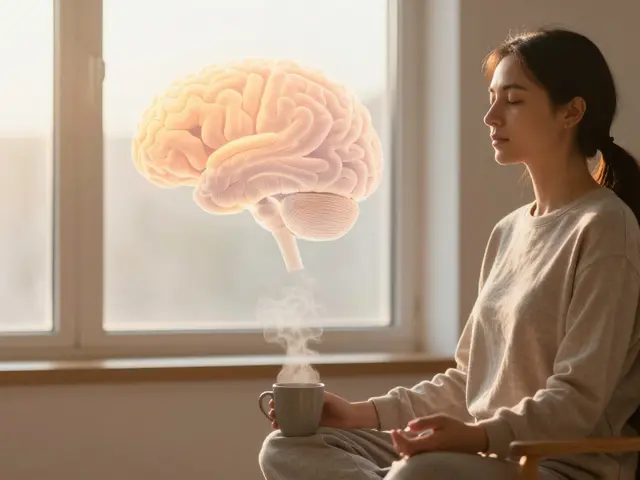
Ever had one of those days where your mind won’t shut off, your shoulders are stuck at your ears, and no amount of coffee helps? You’re not broken. You just need to reset. Aromatherapy isn’t magic-it’s biology. And it’s one of the simplest, most effective tools you can use for daily self-care.
How Aromatherapy Actually Works
When you breathe in lavender, citrus, or peppermint oil, you’re not just smelling something nice. The scent molecules travel straight to your limbic system-the part of your brain that controls emotions, memory, and stress. That’s why a whiff of eucalyptus can clear your head faster than five deep breaths, or why a drop of chamomile on your pillow can make falling asleep feel effortless.
Unlike pills or supplements, aromatherapy doesn’t need to enter your bloodstream to work. It speaks directly to your nervous system. Studies from the University of Vienna and the National Center for Complementary and Integrative Health show that inhaling certain essential oils can lower cortisol levels within minutes. No prescription. No side effects. Just science.
Why It Fits Perfectly in Self-Care Routines
Self-care isn’t about bubble baths and candles (though those help). It’s about consistent, small acts that tell your body: I’m worth slowing down for. Aromatherapy fits because it’s fast, portable, and doesn’t require equipment.
Think about it: you don’t need to schedule time for it. You can diffuse oil while making coffee. Rub a drop of bergamot on your wrists before a Zoom call. Spritz a mist of rosemary and lemon on your neck during your lunch break. These aren’t luxuries-they’re micro-reboots for your nervous system.
In Glasgow, where winters drag and daylight fades early, I’ve seen people turn to aromatherapy not as a trend, but as a lifeline. A friend of mine, a nurse working 12-hour shifts, keeps a small rollerball of frankincense in her pocket. She rubs it on her temples between patients. Says it’s the only thing that brings her back to herself.
Essential Oils That Actually Deliver
Not all oils are created equal. And not every bottle labeled ‘essential oil’ is pure. Look for brands that list the botanical name (like Lavandula angustifolia for lavender) and mention it’s 100% pure, no additives.
- Lavender: The gold standard for calming. Reduces heart rate and blood pressure. Used in hospitals to ease anxiety before procedures.
- Bergamot: Citrusy but not sharp. One of the few oils proven to lift mood without overstimulating. Great for morning routines or low-energy afternoons.
- Peppermint: Not just for headaches. It sharpens focus and reduces mental fatigue. Keep a rollerball on your desk if you work in front of a screen all day.
- Frankincense: Deep, earthy, grounding. Used for centuries in meditation practices. Helps quiet racing thoughts.
- Chamomile: Soothes nervous tension. Especially helpful if you lie awake replaying the day’s stresses.
Start with one or two. Don’t buy a full set. You don’t need 20 oils-you need two that work for you.

How to Use Them Without Overcomplicating It
You don’t need a diffuser. You don’t need a yoga mat. Here’s how real people use aromatherapy daily:
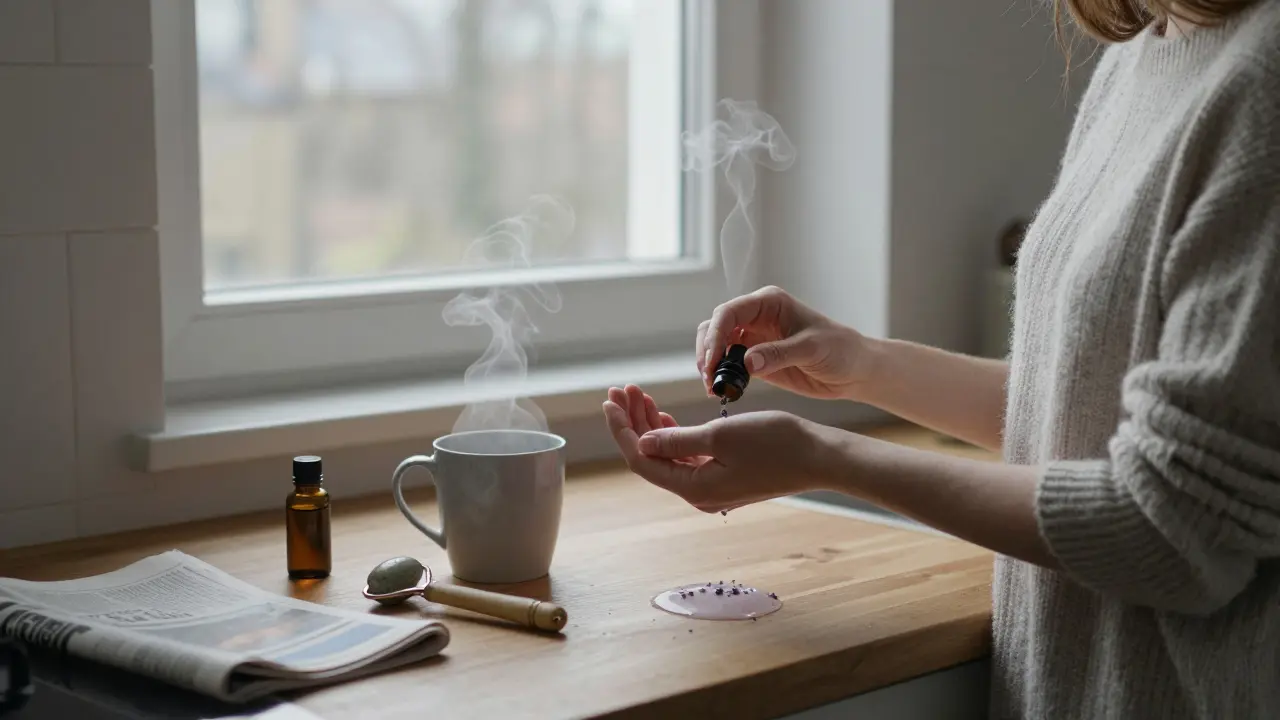
- Rollerball on pulse points: Wrist, neck, behind ears. Safe, easy, and lasts hours.
- Steam inhalation: Add two drops of eucalyptus to a bowl of hot water. Cover your head with a towel and breathe for 60 seconds. Instant nasal relief and mental clarity.
- Shower spray: Mix 5 drops of orange oil with 1/4 cup water in a spray bottle. Mist the shower floor before stepping in. The steam carries the scent everywhere.
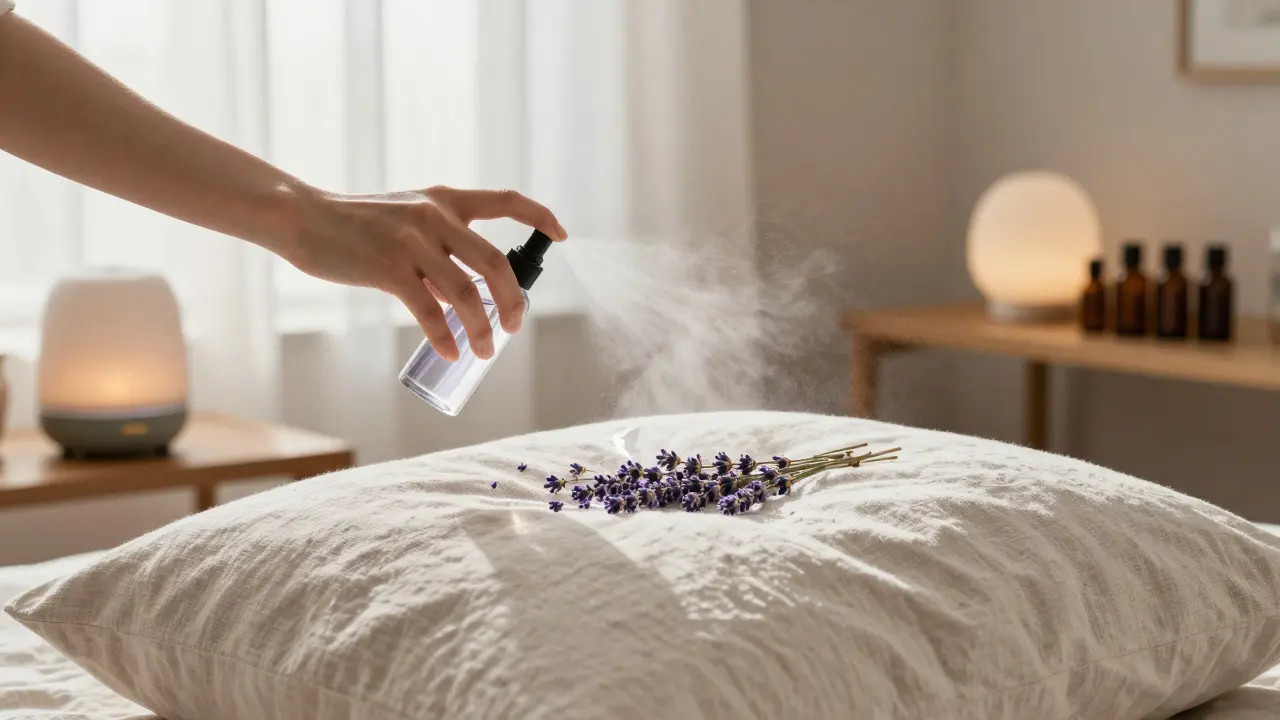
- Bedtime mist: Spritz lavender on your pillowcase. Don’t soak it-just a light mist. Helps signal to your brain: it’s time to unwind.
Never apply undiluted oils directly to skin (except lavender and tea tree, which are generally safe in small amounts). Always use a carrier oil like jojoba or almond if you’re rubbing it on your body.
What Doesn’t Work (And Why)
Aromatherapy isn’t a cure-all. It won’t fix chronic anxiety, depression, or insomnia on its own. But it can be the bridge between stress and relief when nothing else feels accessible.
Don’t fall for hype. If someone tells you ‘rose oil cures trauma’ or ‘cedarwood eliminates burnout,’ walk away. Real aromatherapy doesn’t promise miracles. It offers moments of calm. Small, repeatable, human moments.
And avoid cheap, synthetic ‘fragrance oils.’ They smell nice but don’t have the therapeutic compounds. They’re like candy-sweet, but empty.
Building a Personal Aromatherapy Habit
Start with one intention. Not ‘I want to feel better.’ Try: ‘I want to feel less reactive when my kid screams at 7 a.m.’ or ‘I want to stop reaching for sugar when I’m overwhelmed.’
Then pick one oil that matches that need. Use it at the same time, in the same way, every day for a week. Track how you feel. Not in a journal-just notice. Do you breathe deeper? Do you pause before snapping?
After seven days, you’ll know if it’s working for you. No need to buy more. No need to complicate it. Just keep using what helps.
When to Skip It
Aromatherapy is safe for most people, but not everyone. Skip it if:
- You’re pregnant (some oils like rosemary and clary sage aren’t recommended in early pregnancy).
- You have asthma or severe allergies (test in a well-ventilated area first).
- You’re using it on infants or pets-many oils are toxic to cats and dogs.
- You’re trying to replace medical treatment for a diagnosed condition.
If in doubt, talk to a certified aromatherapist. They’re not just oil sellers-they’re trained in safety, dosing, and interactions.
It’s Not About Perfume. It’s About Presence.
Aromatherapy works because it forces you to pause. To breathe. To notice. In a world that rewards speed, choosing to inhale deeply for 30 seconds is an act of rebellion.
You don’t need to meditate for an hour. You don’t need to spend $200 on a spa day. You just need to let a scent remind you: you’re here. And that’s enough.
Can aromatherapy help with anxiety?
Yes, studies show that inhaling oils like lavender, bergamot, and frankincense can reduce cortisol levels and slow heart rate within minutes. It doesn’t replace therapy for clinical anxiety, but it’s a powerful tool to manage daily stress spikes.
How long do essential oils last?
Pure essential oils last 1-3 years when stored in dark glass bottles away from heat and sunlight. Citrus oils like lemon and orange degrade faster-about 6-12 months. If the scent smells flat or sour, it’s time to replace it.
Can I use aromatherapy with kids?
Yes, but with caution. Use only child-safe oils like lavender, chamomile, or mandarin. Always dilute heavily (1 drop per 1 tablespoon carrier oil). Never diffuse around infants under 6 months. Keep oils out of reach-accidental ingestion can be dangerous.
Is diffusing essential oils safe?
Generally yes, if done correctly. Use 3-5 drops in a diffuser for 30-60 minutes at a time. Never leave it running all night. Avoid diffusing around pets, especially cats. If you feel dizzy or get a headache, turn it off-it’s too strong.
What’s the difference between essential oils and fragrance oils?
Essential oils are distilled from plants and contain active therapeutic compounds. Fragrance oils are synthetic chemicals made to smell like plants. They don’t offer any health benefits and can irritate skin or lungs. Always check the label for botanical names to be sure.