Can’t fall asleep? Can’t stay asleep? You’re not alone. Over 40 million adults in the U.S. struggle with chronic insomnia, and many turn to pills that promise quick fixes but leave behind dependency, grogginess, and worse side effects. What if there was a way to retrain your body to sleep-without drugs, without devices, without spending a fortune? Enter biofeedback: a quiet, science-backed method that lets you see your body’s hidden signals and learn to calm them down, one breath at a time.
What Is Biofeedback, Really?
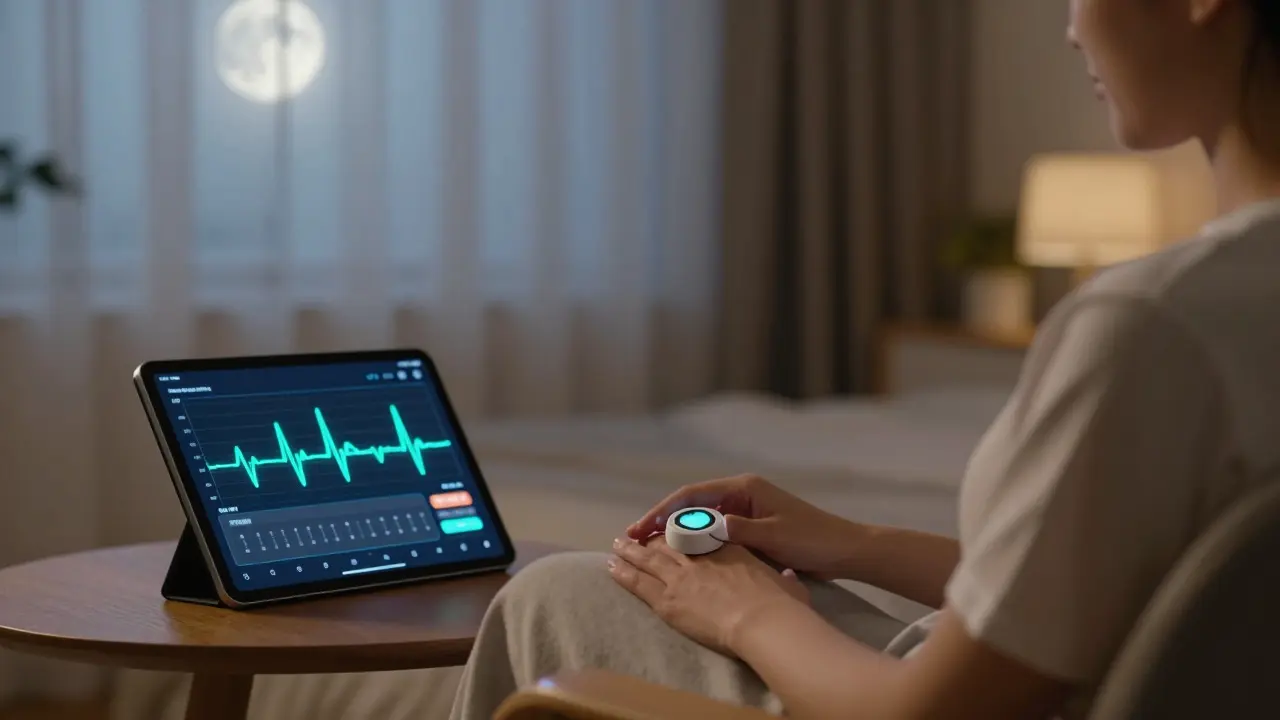
Biofeedback isn’t magic. It’s not some mystical energy trick. It’s a simple process: you attach sensors to your skin that measure things your body does automatically-your heart rate, muscle tension, skin temperature, and brain waves-and then you see those signals displayed on a screen in real time. You don’t control these things consciously. But when you see them, you start to notice patterns. And that’s where the change begins.
For example, when you’re stressed, your muscles tighten. Your heart races. Your hands get cold. Most people never notice these changes until they’re already wide awake at 3 a.m., heart pounding, mind spinning. Biofeedback makes the invisible visible. You learn that your body is already trying to tell you when it’s time to relax-and you finally start listening.
It’s been used since the 1960s. NASA trained astronauts with it. Athletes use it to manage performance anxiety. And now, it’s becoming a go-to tool for people with insomnia who’ve tried everything else.
How Biofeedback Helps You Sleep
Insomnia isn’t just about lying in bed awake. It’s about your nervous system being stuck in fight-or-flight mode. Your brain thinks danger is near-even when you’re safe in your own bed. That’s why your heart won’t slow down. Your shoulders stay clenched. Your thoughts race. Biofeedback breaks that cycle by teaching your body the opposite: how to turn on the rest-and-digest response.
Here’s how it works in practice:
- You sit quietly with sensors on your fingers, forehead, or chest.
- A screen shows your heart rate variability (HRV)-a key indicator of relaxation. High HRV = calm. Low HRV = stressed.
- You breathe slowly, just a little deeper than normal. As you do, the graph on the screen starts to rise.
- You see your body responding. That’s the reward. Your brain learns: “This breathing = calm = sleep.”
- After 10-15 sessions, you start doing it without the machine. You feel your own tension. You breathe. You drift off.
One 2023 study from the University of Michigan followed 68 people with chronic insomnia for six months. Half used biofeedback; half took sleep medication. After three months, the biofeedback group had better sleep efficiency, fewer nighttime awakenings, and no side effects. The medication group reported more daytime drowsiness and a 30% relapse rate after stopping pills.
Types of Biofeedback for Sleep
Not all biofeedback is the same. Different sensors track different signals. For insomnia, three types stand out:
- Heart Rate Variability (HRV) Biofeedback - Tracks the tiny changes between heartbeats. High HRV means your parasympathetic nervous system (the one that calms you down) is active. This is the most effective for sleep. Devices like the HeartMath InnerBalance or Elite HRV make this easy to use at home.
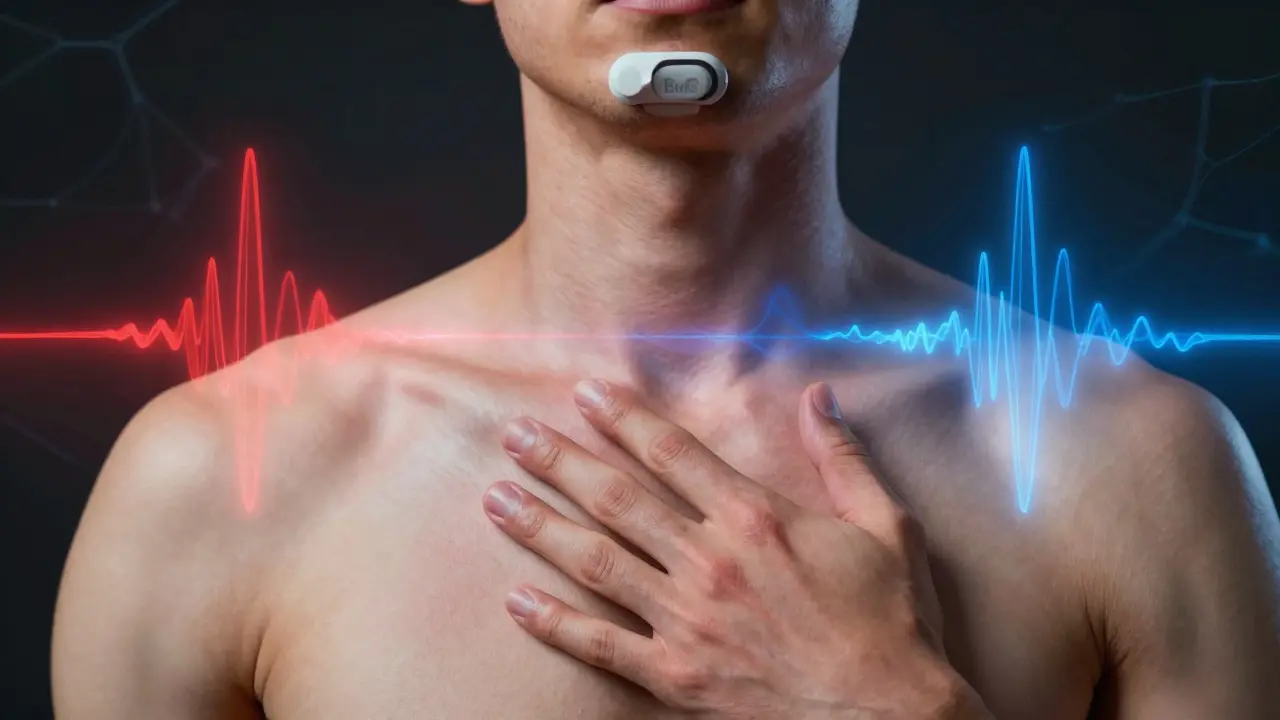
- Electromyography (EMG) Biofeedback - Measures muscle tension, especially in the forehead, jaw, and neck. Most insomniacs clench their jaw or tighten their scalp muscles without realizing it. Seeing the spikes on the screen helps you release that tension before bed.
- Thermal Biofeedback - Monitors hand temperature. Cold hands = stress. Warm hands = relaxation. By focusing on warming your hands, you trigger a full-body calming response. This technique has been used successfully since the 1970s for anxiety and sleep.
You don’t need all three. Most people see results with just HRV or EMG. Start with one, stick with it for at least 8 sessions, and see how your sleep changes.
What You Need to Get Started
You don’t need a clinic or a doctor’s referral to begin. Home biofeedback devices are affordable, FDA-cleared, and easy to use.
Here’s what you actually need:
- A sensor device: Options like the HeartMath InnerBalance (connects to your phone), Relax Melodies Biofeedback, or Biofeedback Pro by Thought Technology cost between $50 and $150.
- A quiet space: A chair, a dark room, 15 minutes before bed.
- Patience: Results come after 4-6 sessions. Don’t expect overnight miracles.
Some insurance plans cover biofeedback if prescribed by a licensed therapist. Check with your provider. If not, the out-of-pocket cost is far less than a year’s supply of sleep meds.
Who Benefits Most?
Biofeedback isn’t a cure-all, but it works best for specific types of insomnia:
- People who lie awake with racing thoughts or physical tension
- Those who’ve tried meditation but can’t quiet their mind
- People with anxiety-related sleep issues
- Anyone avoiding sleep meds due to side effects or dependency
It’s less effective for sleep apnea, restless leg syndrome, or shift work disorder-those need medical evaluation first. But if your problem is stress, overthinking, or muscle tightness at bedtime? Biofeedback gives you back control.
Real-Life Success: Sarah’s Story
Sarah, 42, was on melatonin and prescription sleeping pills for three years. She’d wake up three times a night, her neck and jaw aching. Her doctor suggested CBT-I, but she couldn’t commit to weekly sessions. She bought a HeartMath sensor for $99.
At first, she didn’t believe it. “I’d breathe and nothing changed.” But after the sixth session, she noticed something: her HRV graph started climbing even before she finished breathing. She realized her body was learning. Within three weeks, she stopped taking pills. By week eight, she was falling asleep in under 15 minutes-without counting sheep or listening to white noise.
“I didn’t know my body was holding onto stress like that,” she says. “Now I just feel it. And I let it go.”
Common Mistakes and How to Avoid Them
Most people give up too soon. Or they do it wrong. Here’s what goes wrong-and how to fix it:
- Mistake: Trying to force relaxation. Fix: Don’t fight tension. Just notice it. Let the screen show you what’s happening. The goal isn’t to be calm-it’s to learn how calm feels.
- Mistake: Using it right in bed. Fix: Practice sitting upright first. Your body needs to learn the skill before you try it lying down.
- Mistake: Skipping sessions. Fix: Do it at the same time every day-even if you slept well. Consistency builds the neural pathway.
- Mistake: Expecting instant results. Fix: This isn’t a drug. It’s a skill. Like learning to ride a bike. You wobble at first. Then one day, you’re flying.

How It Compares to Other Sleep Tools
Here’s how biofeedback stacks up against other popular sleep aids:
| Method | Effectiveness for Insomnia | Side Effects | Cost (Annual) | Long-Term Results |
|---|---|---|---|---|
| Biofeedback | High | None | $50-$200 | Stays with you |
| Prescription Sleep Pills | Moderate | Drowsiness, dependency, memory issues | $300-$1,200 | Often fails after stopping |
| Meditation Apps | Moderate | None | $0-$80 | Depends on consistency |
| Cognitive Behavioral Therapy (CBT-I) | Very High | None | $600-$1,500 | Best long-term outcomes |
| Melatonin Supplements | Low to Moderate | Headaches, dizziness, next-day fog | $20-$100 | Temporary relief |
Biofeedback sits between CBT-I and meditation. It’s more structured than apps, less time-intensive than therapy, and far safer than pills. It doesn’t replace CBT-I-but it’s a powerful companion.
Where to Find Help
If you want professional guidance, look for a licensed therapist trained in biofeedback. Organizations like the Association for Applied Psychophysiology and Biofeedback (AAPB) offer directories. Many psychologists, physical therapists, and even some chiropractors offer sessions.
Or start at home. Buy a simple HRV device. Use it for 10 minutes before bed. Track your sleep in a journal. Notice how your bedtime routine changes. After a month, you’ll know if it’s working.
You don’t need to believe in it. You just need to try it.
Why This Works When Nothing Else Did
Most sleep advice tells you to “relax” or “stop thinking.” But your brain doesn’t obey commands like that. It needs feedback. It needs proof. Biofeedback gives your nervous system the data it craves: “This breathing = safety.” “This heartbeat = calm.” “This warmth = sleep.”
It’s not about willpower. It’s about rewiring. And your body? It’s already wired for sleep. You just forgot how to let it happen.
There’s no pill that teaches you that. But biofeedback does.
Can biofeedback cure insomnia permanently?
Biofeedback doesn’t “cure” insomnia like a drug might. Instead, it teaches your body to regulate itself. Many people who stick with it for 8-12 sessions find their sleep stays stable for years-even after stopping the device. It’s not a magic fix, but it’s one of the few tools that changes your biology long-term.
Is biofeedback safe for people with heart conditions?
Yes. Biofeedback devices that measure heart rate variability are non-invasive and passively monitor your body. They don’t send signals into you-they only read what’s already happening. But if you have a pacemaker or serious arrhythmia, check with your doctor before using any wearable sensor.
How long does each session take?
Most home sessions last 10 to 15 minutes. You can do them once or twice a day. For sleep, doing it right before bed works best. You don’t need to sit still for hours-just long enough to notice your body calming down.
Do I need a therapist to use biofeedback?
No. Many FDA-cleared home devices guide you through the process with apps and audio cues. But if you’re struggling to interpret the data or have severe anxiety, working with a certified biofeedback therapist can speed up results. It’s optional, not required.
Can children use biofeedback for sleep problems?
Yes. Biofeedback is used successfully with children who have ADHD, anxiety, or sleep-onset insomnia. Devices designed for kids are often gamified-like a game where your breath makes a dragon fly higher. It turns learning into play, which helps kids stay engaged.
Next Steps
If you’ve tried counting sheep, white noise, melatonin, and sleep apps-with little success-biofeedback might be the missing piece. Start small: buy a $70 HRV sensor. Use it for 10 minutes before bed for two weeks. Write down how you feel when you wake up. Don’t judge. Just observe.
Your body already knows how to sleep. You just need to give it the right signals. Biofeedback gives you the map. All you have to do is follow it.