When words fail, your body or your brush might speak louder than any sentence ever could. Creative arts therapies aren’t just hobbies or weekend pastimes-they’re proven, powerful tools for unlocking emotions you didn’t even know you were holding onto. Whether it’s painting when you can’t find the words, drumming out anger you can’t voice, or moving through grief in a dance, these therapies help people heal in ways talk therapy alone simply can’t reach.
What Exactly Are Creative Arts Therapies?
Creative arts therapies are clinical, evidence-based practices that use artistic expression as a form of communication and healing. Unlike taking an art class for fun, these therapies are led by trained professionals-art therapists, music therapists, dance/movement therapists-who hold master’s degrees and are certified in their field. They work with people facing trauma, depression, anxiety, autism, PTSD, dementia, and even chronic illness.
There are five main types:
- Art therapy-using drawing, painting, sculpting, or collage to explore feelings
- Music therapy-listening to, creating, or moving to music to regulate emotions
- Dance/movement therapy-using body movement to express and process emotional states
- Drumming therapy-a subset of music therapy that uses rhythm to build connection and release tension
- Expressive writing-though sometimes grouped separately, it’s often included as a creative arts therapy when used therapeutically
Each one taps into different parts of the brain. Art therapy activates visual-spatial areas, music therapy engages auditory and emotional centers like the amygdala, and movement therapy connects the motor cortex with the limbic system-the part of the brain that stores trauma.
Why Do People Turn to Creative Arts Therapies?
Most people don’t start these therapies because they’re "artistic." They come because they’re stuck. Maybe they’ve been in talk therapy for months and still feel numb. Maybe they’re a child who doesn’t know how to say, "I’m scared." Or an adult who’s been told to "just get over it" after a loss.
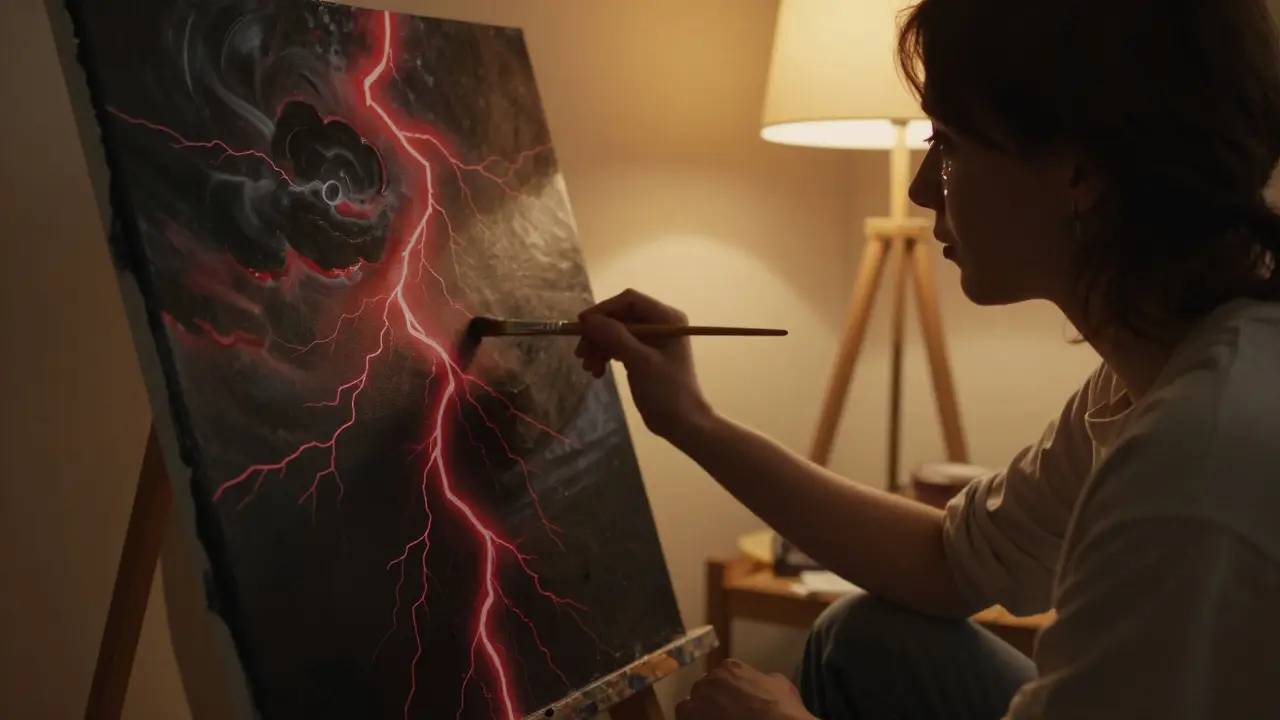
One woman I worked with-let’s call her Elena-couldn’t speak about her divorce for two years. She tried journaling. She tried meditation. Nothing clicked. Then, in her third session with an art therapist, she painted a black storm cloud with red lightning inside it. She didn’t say a word. The therapist didn’t push. But when Elena saw the painting a week later, she cried and said, "That’s how I felt every morning. I didn’t know I still carried it."
That’s the power of creative arts therapies: they bypass the language centers of the brain and speak directly to the emotional core. You don’t need to be good at art. You don’t need to know how to play an instrument. You just need to be willing to try.
How Art Therapy Helps the Brain Heal
Studies from the Journal of the American Art Therapy Association show that just 45 minutes of art-making reduces cortisol levels by over 75% in people with high stress. That’s more effective than a 45-minute walk or even a 30-minute meditation session in some cases.
Why? Because creating art activates the prefrontal cortex-the part of the brain responsible for focus, decision-making, and emotional regulation. At the same time, it quiets the default mode network, which is responsible for rumination and overthinking. In simple terms: when you’re coloring or molding clay, your brain stops replaying the same painful thoughts on loop.
For trauma survivors, this is huge. Trauma gets stored in the body and the nonverbal parts of the brain. Talking about it often retraumatizes. But when you draw the feeling of being trapped, or sculpt a version of yourself that’s strong and standing tall, you’re not reliving the trauma-you’re rewriting it.
Music Therapy: More Than Just Listening to Songs
Music therapy isn’t about picking your favorite playlist. It’s about using rhythm, melody, and sound to create structure where chaos lives.
For people with autism, music therapy helps improve social engagement. A 2024 study in Frontiers in Psychology found that children with autism who participated in 12 weeks of structured music therapy showed a 40% increase in eye contact and verbal responses compared to those who received standard behavioral therapy.
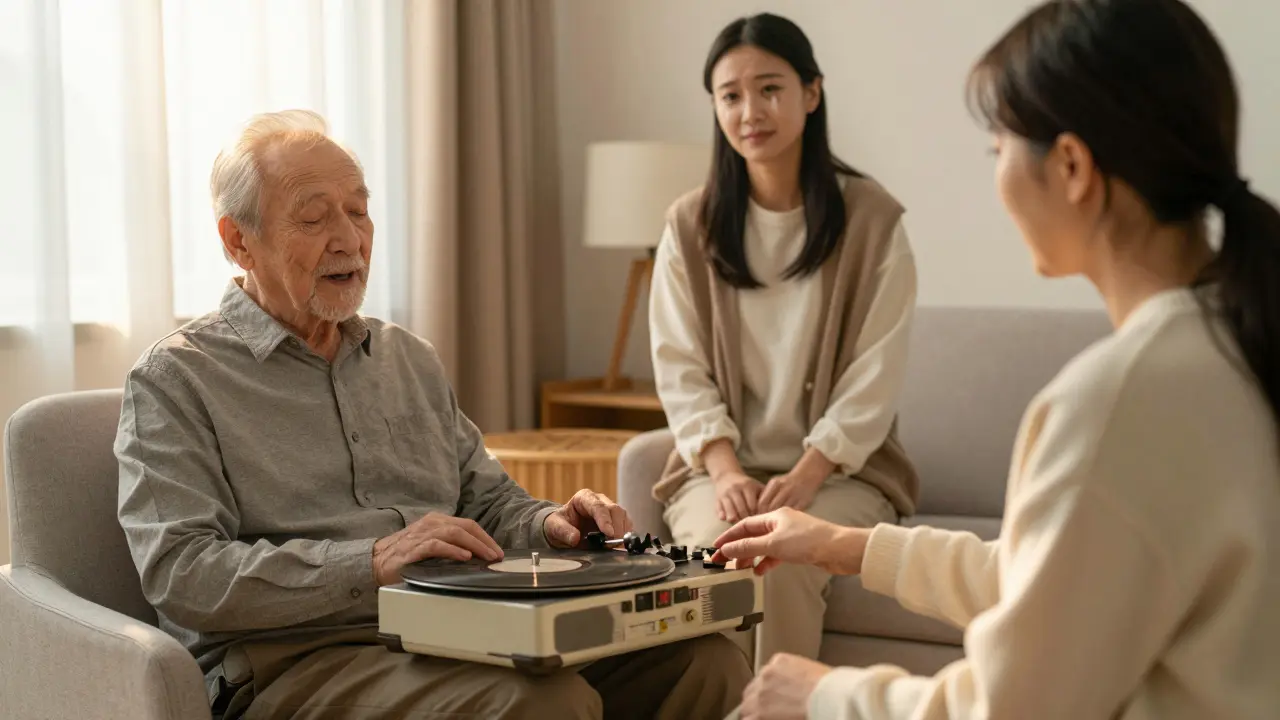
For those with dementia, familiar songs from childhood can trigger memories long thought lost. A man in his 80s with advanced Alzheimer’s hadn’t spoken in over a year. When his therapist played a song from his teenage years-"My Girl" by The Temptations-he began humming. Then singing. Then talking about his first date. That moment lasted 17 minutes. But it was the first time he’d connected with his family in three years.
Even rhythm alone can help. Drumming circles for veterans with PTSD have been shown to synchronize heart rates and reduce hypervigilance. It’s not magic-it’s neuroscience. Shared rhythm creates a sense of safety and belonging.
Dance and Movement: Healing Through the Body
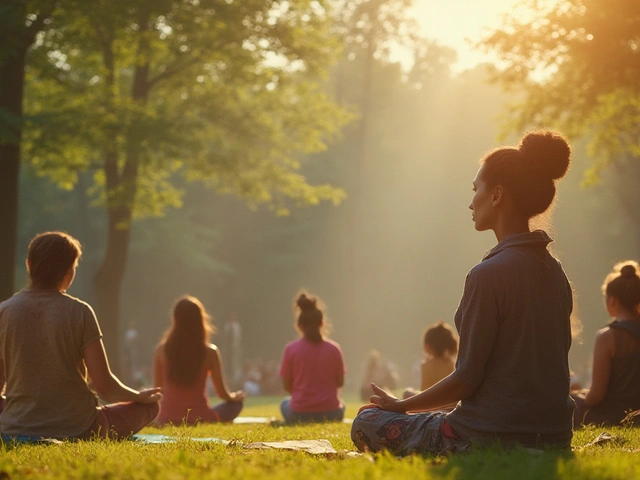
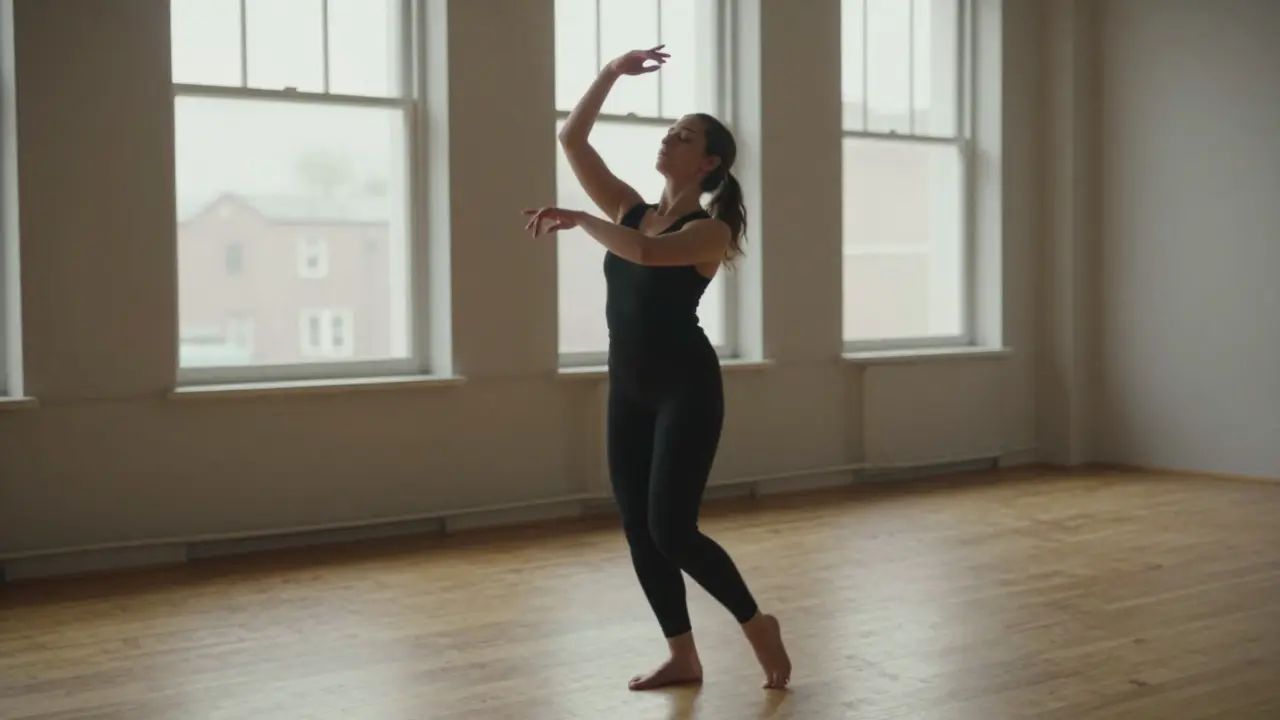
Dance/movement therapy is often misunderstood. It’s not ballet. It’s not performance. It’s about letting your body move in response to how you feel-whether that’s shaking, swaying, or curling into a ball.
For survivors of sexual assault, movement therapy helps reclaim physical autonomy. One participant described it this way: "I used to feel like my body belonged to someone else. In therapy, I learned I could move it however I wanted. Even if it was just lifting my arm. That was freedom."
Studies show dance therapy reduces symptoms of depression as effectively as antidepressants in mild to moderate cases. The key isn’t technique-it’s awareness. When you notice how your shoulders tense when you hear a certain sound, or how your feet want to run when you feel anxious, you’re building emotional literacy through movement.
Who Can Benefit?
Creative arts therapies aren’t limited to certain ages or diagnoses. They’re used with:
- Children with ADHD or developmental delays
- Teens struggling with identity or self-harm
- Adults dealing with grief, addiction, or job loss
- Older adults with memory loss or social isolation
- Refugees and trauma survivors
- People with chronic pain or terminal illness
One hospital in Ohio uses art therapy for cancer patients undergoing chemo. Patients paint their treatments-what the IV feels like, what the nausea looks like. The result? Less fear, more control. One woman painted a dragon breathing fire and called it "my chemo." Her therapist asked, "What would your dragon need to calm down?" She painted a blanket around it. The next week, she brought in a real blanket from home. She said it helped her feel safer.
Getting Started: What to Expect
If you’re curious, here’s what a real session looks like:
- You meet with a certified therapist (they’ll have credentials like ATR, MT-BC, or R-DMT)
- You’re not told what to create-you’re invited to explore
- The therapist observes, listens, and asks open questions like, "What surprised you about this piece?" or "How did your body want to move today?"
- There’s no analysis of "what it means." The meaning comes from you
- Each session builds on the last. Progress isn’t linear
Most people start with weekly sessions. Some continue for months. Others find what they need in just a few. There’s no timeline. Healing doesn’t clock in.
Why This Isn’t Just "Feel-Good" Stuff
Some people dismiss creative arts therapies as "touchy-feely" or "for kids." But the data doesn’t lie.
A 2023 meta-analysis of 87 clinical trials found that creative arts therapies significantly improved emotional regulation, reduced anxiety, and increased self-esteem across all age groups. The effects lasted up to six months after therapy ended-longer than many medication regimens.
And unlike talk therapy, which relies heavily on verbal skill, creative arts therapies work for people who are nonverbal, autistic, brain-injured, or too overwhelmed to speak. They don’t need to be articulate. They just need to be human.
The Real Secret: You Already Have What You Need
You don’t need a studio. You don’t need expensive supplies. You don’t need permission.
Try this tonight: Grab a pen and paper. Don’t think. Just draw how you feel right now. Don’t worry about how it looks. Let your hand move. When you’re done, look at it. Ask yourself: "What does this tell me?"
That’s the beginning of creative arts therapy. It’s not about becoming an artist. It’s about becoming more yourself.
Can creative arts therapies replace talk therapy or medication?
Creative arts therapies are not meant to replace talk therapy or medication for everyone. They’re often used alongside them. For some people, especially those who struggle to verbalize emotions, art or music therapy can be the breakthrough that makes talk therapy more effective. For others, especially with severe depression or psychosis, medication may be necessary first. The best outcomes happen when therapies are combined under professional guidance.
Do I need to be "good" at art, music, or dance to benefit?
No. In fact, people who think they "can’t do art" often benefit the most. Creative arts therapy isn’t about skill-it’s about expression. A child scribbling violently, an elderly man tapping his foot to a drum, a woman folding paper into cranes-none of them are "artists." But they’re all communicating something real. The therapist doesn’t judge the quality. They pay attention to the meaning.
Are creative arts therapies covered by insurance?
In the U.S., many insurance plans now cover art, music, and dance therapy when provided by licensed clinicians. Medicare and Medicaid cover them in certain settings like hospitals and long-term care. Private insurers vary-check your plan’s mental health benefits. Many clinics also offer sliding scale fees based on income.
How do I find a certified creative arts therapist?
Look for credentials: Art therapists are ATR or ATR-BC (Registered or Board-Certified Art Therapist). Music therapists are MT-BC (Music Therapist-Board Certified). Dance therapists are R-DMT (Registered Dance/Movement Therapist). You can search directories through the American Art Therapy Association, the American Music Therapy Association, or the American Dance Therapy Association. Always verify their license and training.
Can I practice creative arts therapy on my own?
You can absolutely use creative expression for self-healing. Journaling, doodling, dancing in your room, playing an instrument for fun-all of these can be deeply therapeutic. But true creative arts therapy involves a trained professional who understands psychological principles, trauma responses, and how to safely guide emotional release. Self-practice is healing. Professional therapy is transformative.