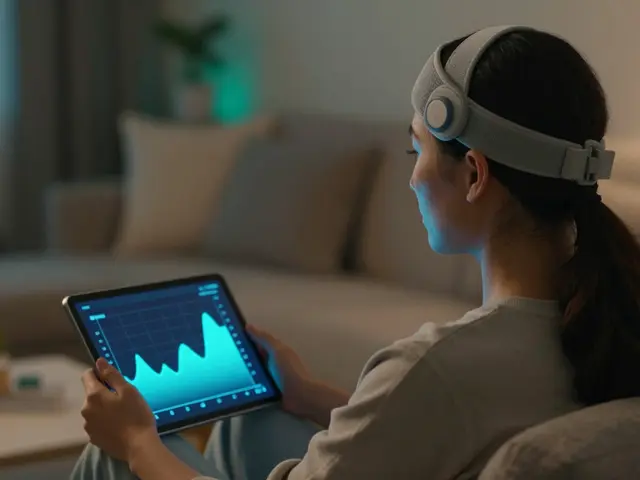
Have you ever felt your heart racing during a panic attack and wished you could just hit pause? Or noticed your shoulders creeping up to your ears after a long day at work, but couldn’t figure out how to make them relax? What if you could see your body’s stress signals in real time - and learn, step by step, how to calm them down? That’s what biofeedback does.
What Exactly Is Biofeedback?
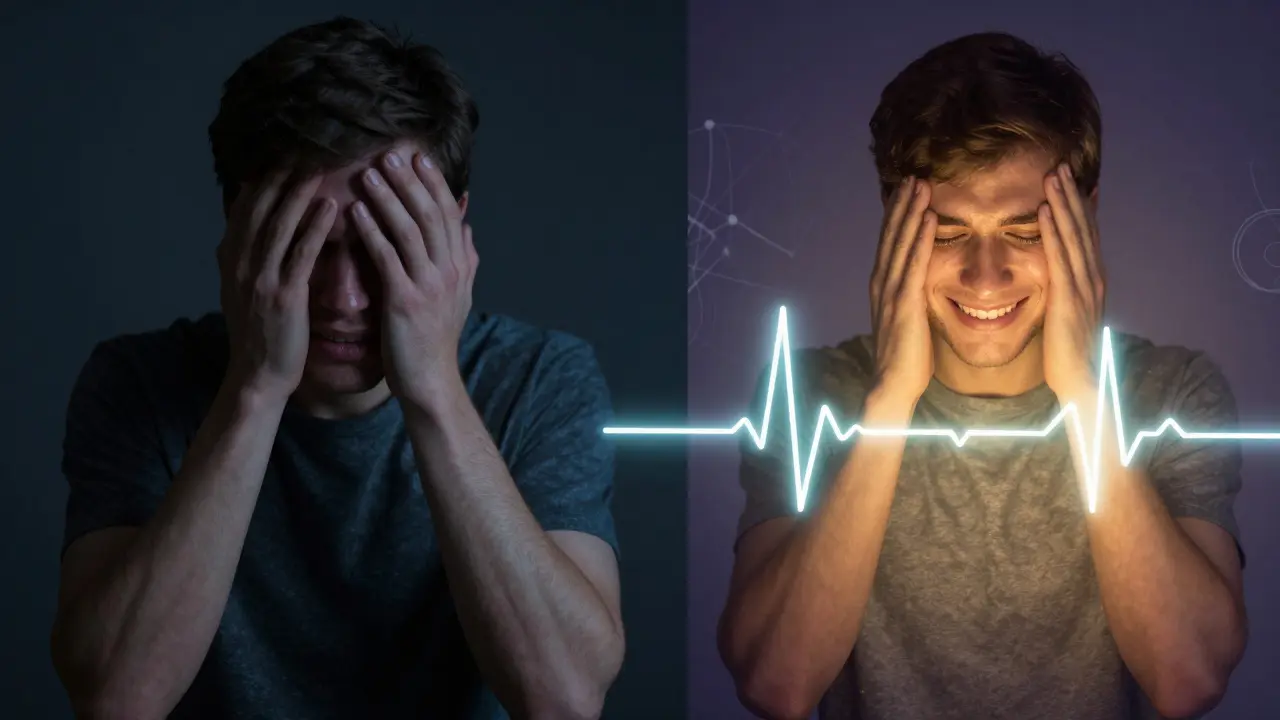
Biofeedback is a technique that uses sensors to measure your body’s automatic functions - like heart rate, muscle tension, skin temperature, and brainwaves - and turns those signals into visual or sound cues you can understand. Think of it like a mirror for your nervous system. You don’t control your heartbeat or sweat levels consciously, but with biofeedback, you learn how to influence them.
It’s not magic. It’s science. The first biofeedback machines were developed in the 1960s by researchers studying how the mind affects the body. Today, the technology is simpler, cheaper, and more accessible than ever. You can now use a small device that clips onto your finger or wears like a wristband to track your heart rate variability while sitting at your desk.
Unlike meditation or deep breathing alone, biofeedback gives you immediate, objective feedback. You’re not guessing whether you’re relaxed. You’re seeing it on a graph.
How Biofeedback Works in Real Life
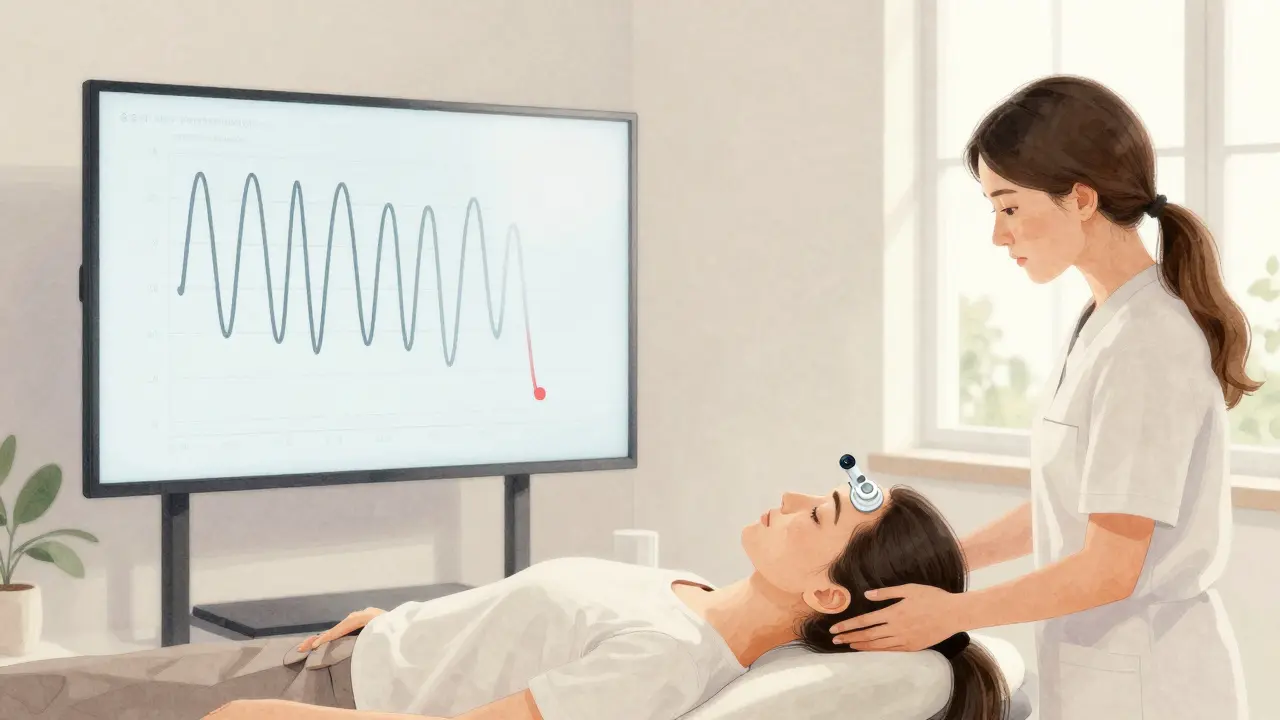
Let’s say you’re someone who gets migraines when you’re stressed. Your doctor suggests biofeedback. You sit in a quiet room with a sensor on your forehead that measures muscle tension. On the screen, a line jumps up every time your brow tightens - often without you even realizing it. The therapist says, “Now, try to let go.” You take a slow breath. The line drops. You do it again. And again. After five sessions, you start noticing the tension building during your commute. You don’t need the machine anymore. You just remember what relaxation feels like.
Or consider someone with high blood pressure. Instead of relying only on medication, they use a biofeedback device that shows their heart rate variability (HRV) on a phone app. Low HRV means stress is running the show. High HRV means their body is resilient. They practice breathing slowly for 10 minutes a day, watching their HRV climb. In three months, their resting blood pressure drops by 12 points.
This isn’t anecdotal. A 2023 review in the Journal of Clinical Psychology found that biofeedback helped reduce migraine frequency by 50% or more in 70% of participants. Another study from the Mayo Clinic showed that people with chronic anxiety saw significant improvement after just eight sessions of respiratory biofeedback.
What Biofeedback Can Actually Do for You
Biofeedback doesn’t promise to cure everything. But it gives you back control over things you thought were out of your hands. Here’s what research and real users report:
- Reduces chronic headaches and migraines - by teaching you to release jaw and forehead tension before it triggers pain.
- Lowers blood pressure - through improved heart rate variability and reduced sympathetic nervous system activity.
- Manages anxiety and panic attacks - by helping you recognize early signs of overactivation and calm your breathing before it spirals.
- Improves sleep - by lowering muscle tension and heart rate before bed, making it easier to fall and stay asleep.
- Helps with incontinence - especially after childbirth or prostate surgery, by training pelvic floor muscles with real-time feedback.
- Supports athletic recovery - pro athletes use it to monitor stress levels and optimize rest periods between training.
It’s not a replacement for medical treatment. But for people tired of popping pills or feeling powerless over their body’s reactions, biofeedback offers a tool - not a quick fix, but a skill you build over time.
Types of Biofeedback You Can Try
Not all biofeedback is the same. Different sensors track different signals. Here are the most common types:
- Electromyography (EMG) - Measures muscle tension. Used for headaches, back pain, and TMJ.
- Thermal biofeedback - Tracks skin temperature. Cold fingers often mean stress. Warming them up signals relaxation.
- Heart rate variability (HRV) biofeedback - Shows how your heart responds to breathing. High HRV = calm. Low HRV = stressed. This is the most popular type for home use today.
- Neurofeedback (EEG) - Monitors brainwave patterns. Used for ADHD, insomnia, and PTSD. Requires professional setup.
- Galvanic skin response (GSR) - Measures sweat levels. Tells you when your nervous system is activated.
For most people starting out, HRV biofeedback is the easiest to begin with. Devices like the InnerBalance app with a Bluetooth sensor, or the Spire Stone, cost under $100 and connect to your phone. No clinic visit needed.
How to Get Started
You don’t need a prescription or a fancy lab. Here’s how to begin:
- Choose a simple HRV or EMG device. Look for ones with clear visuals and guided breathing exercises.
- Set aside 10 minutes a day, same time, in a quiet spot. Morning or before bed works best.
- Follow the app’s breathing rhythm. Inhale for 4 seconds, hold for 2, exhale for 6. Watch the graph respond.
- Don’t force it. If your mind wanders, that’s normal. Just notice and return to the breath.
- Track your progress over two weeks. You’ll start seeing patterns - like how caffeine or a bad night’s sleep drops your HRV.
Some people feel results in days. Others take weeks. The key is consistency. It’s like going to the gym for your nervous system.
What Biofeedback Won’t Do
It’s important to set realistic expectations. Biofeedback won’t:
- Replace medication for severe conditions like epilepsy or clinical depression.
- Fix trauma overnight. It helps manage symptoms, but deep emotional wounds need therapy too.
- Work if you’re skeptical and don’t practice. You can’t outsmart your nervous system.
- Be a magic cure-all. It’s one tool in a bigger toolbox - sleep, movement, nutrition, and connection matter just as much.
Think of it like a fitness tracker for your stress levels. It doesn’t make you healthy - it shows you where to focus your efforts.
Who Benefits Most?
Biofeedback works best for people who:
- Feel out of sync with their body - like their stress is running on autopilot.
- Are motivated to learn, not just be fixed.
- Prefer non-drug approaches to managing symptoms.
- Have tried meditation or yoga but couldn’t tell if they were doing it right.
It’s especially helpful for:
- Parents juggling work and kids - high stress, low recovery time.
- Office workers with chronic neck pain from typing.
- Students before exams.
- People recovering from injury or surgery who need to reduce tension without overexerting.
If you’re someone who says, “I just need to chill out,” but can’t seem to, biofeedback gives you the map.
Where to Find Help
You can start at home with a device, but working with a trained professional boosts results. Look for:
- Clinical psychologists trained in biofeedback (often listed through the Association for Applied Psychophysiology and Biofeedback).
- Physical therapists who use EMG for pain management.
- Integrative medicine clinics that offer biofeedback as part of holistic care.
In Brisbane, several private practices now offer biofeedback sessions - often covered by private health insurance under “allied health” if you have a referral from your GP.
Don’t wait for a crisis. If you’ve ever felt your body betray you - racing heart, clenched jaw, sleepless nights - biofeedback gives you a way to listen, understand, and finally take back control.
Is biofeedback safe?
Yes. Biofeedback is non-invasive and has no known side effects. The sensors only read your body’s signals - they don’t send any electricity or stimulation back into you. It’s like using a thermometer to check your temperature. Safe for children, pregnant women, and seniors.
How long until I see results?
Some people notice changes after just 2-3 sessions, especially with breathing and heart rate feedback. For lasting results, most people need 6-12 sessions over 2-3 months. Like learning an instrument, it takes practice. The goal isn’t to feel calm all the time - it’s to recognize stress early and respond before it overwhelms you.
Can I use biofeedback with therapy or medication?
Absolutely. Biofeedback complements therapy, medication, and lifestyle changes. Many therapists use it alongside CBT to help clients visualize progress. If you’re on blood pressure or anxiety meds, biofeedback can help you reduce dosage over time - but only under your doctor’s supervision.
Do I need to buy expensive equipment?
No. While clinics use professional-grade systems, you can start effectively with a $60-$120 home device like the HeartMath InnerBalance or Spire Stone. These sync with free apps and give you the same core feedback: your breathing rhythm and heart rate variability. You don’t need to spend thousands to get real results.
Is biofeedback the same as meditation?
They’re related, but different. Meditation asks you to quiet your mind without feedback. Biofeedback gives you real-time data on your body’s state, so you know exactly what’s working. Many people use biofeedback to improve their meditation - they see their heart rate drop as they focus, which reinforces the behavior. It’s meditation with a GPS.
If you’re tired of feeling like your body is working against you, biofeedback isn’t just another trend - it’s a quiet revolution in self-awareness. You don’t need to be a scientist or a yogi. You just need to be willing to pay attention.