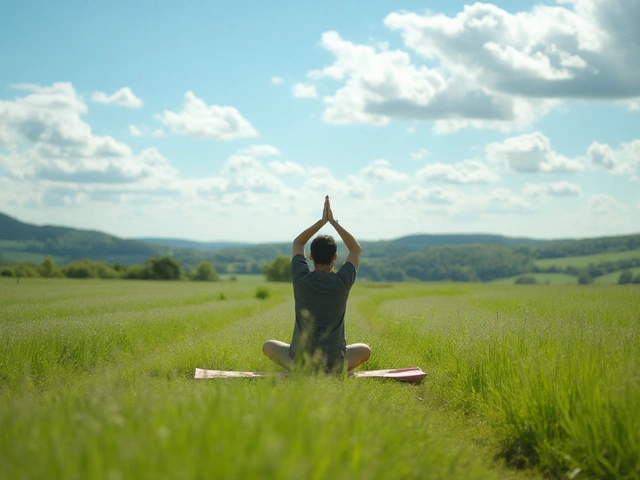

Why You Feel Stuck in the Noise
You check your phone one last time before bed. The screen lights up your face with notifications, emails, and news headlines that demand immediate attention. Your heart rate spikes slightly. You tell yourself you’re just "checking," but ten minutes later, you’re still scrolling. This isn’t laziness; it’s a nervous system stuck in overdrive.
In 2026, the average person processes more information in a single day than our ancestors did in a lifetime. Our brains haven’t evolved to handle this constant barrage of stimuli. The result? A low-grade hum of anxiety that we’ve normalized as "just life." But what if you could turn down the volume? What if finding inner peace wasn’t about escaping reality, but about training your body to respond differently to it?
This isn’t about becoming a monk on a mountain. It’s about practical, science-backed tools you can use in your kitchen, your car, or your office chair. Let’s look at how you can reclaim your calm using specific relaxation techniques that actually work.
The Science Behind the Stress Response
To relax effectively, you first need to understand what you’re fighting against. When you perceive a threat-whether it’s a tiger in the bushes or an angry email from your boss-your amygdala hits the panic button. It signals your hypothalamus to activate the sympathetic nervous system.
Sympathetic Nervous System is the part of the autonomic nervous system responsible for the fight-or-flight response. It releases adrenaline and cortisol, increasing your heart rate, dilating your pupils, and diverting blood flow to your muscles. This was designed for short bursts of survival, not for eight-hour workdays.
The problem arises when this system stays engaged. Chronic elevation of cortisol leads to inflammation, sleep disturbances, and digestive issues. To counteract this, you need to engage the opposite system: the parasympathetic nervous system. Often called the "rest and digest" mode, this state lowers your heart rate, promotes digestion, and allows your body to repair itself.
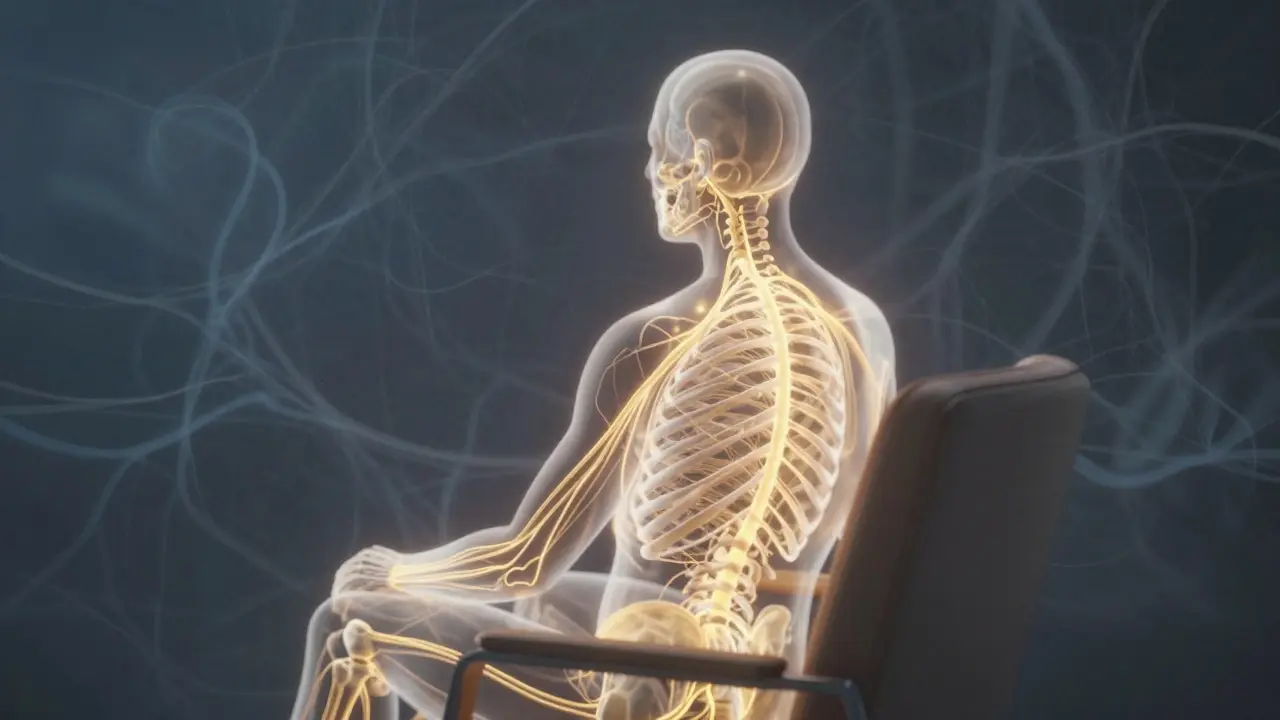
The bridge between these two states is your vagus nerve. This long cranial nerve runs from your brainstem to your abdomen. Stimulating the vagus nerve is the key to triggering relaxation. Every technique mentioned below works by sending signals through this nerve to tell your brain, "We are safe now."
Breathing: The Remote Control for Your Nervous System
Breathing is unique because it’s both automatic and voluntary. You can breathe without thinking, but you can also control it consciously. This makes it the most accessible tool for instant relaxation. However, not all breathing is created equal.
Most stressed people breathe shallowly into their chest. This keeps the sympathetic nervous system active. To trigger calm, you need to shift to diaphragmatic breathing, where your belly expands rather than your shoulders rising.
| Technique | Method | Best For | Duration |
|---|---|---|---|
| Box Breathing | Inhale 4s, Hold 4s, Exhale 4s, Hold 4s | Acute stress, focus | 2-5 minutes |
| 4-7-8 Breathing | Inhale 4s, Hold 7s, Exhale 8s | Sleep, anxiety | 4 cycles |
| Diaphragmatic | Deep belly breaths, slow exhale | General relaxation | 5-10 minutes |
Box breathing, used by Navy SEALs to maintain calm under pressure, creates a rhythmic pattern that forces your mind to focus on counting. This dual action-physiological slowing and cognitive distraction-is powerful. Try this next time you’re stuck in traffic. Inhale for four seconds, hold for four, exhale for four, and hold empty for four. Repeat until your grip on the steering wheel loosens.
The 4-7-8 technique, popularized by Dr. Andrew Weil, is specifically designed to act as a natural tranquilizer for the nervous system. The extended exhale is crucial here. Exhalation stimulates the vagus nerve directly. By making your exhale longer than your inhale, you physically force your heart rate to drop. It’s hard to stay anxious when your physiology is telling you to chill.
Mindfulness: Anchoring Yourself in the Now
If breathing is the hardware reset, mindfulness is the software update. Mindfulness isn’t about clearing your mind; that’s impossible. It’s about changing your relationship with your thoughts. Instead of getting swept away by a spiral of worry, you observe the thought like a cloud passing in the sky.
Mindfulness Meditation is a mental training practice that involves focusing your attention on the present moment while acknowledging and accepting feelings, thoughts, and sensations. Research from Harvard University has shown that regular mindfulness practice can actually reduce the density of the amygdala, the brain region associated with stress.
You don’t need a cushion or a quiet room to start. Try the "5-4-3-2-1" grounding technique. This is excellent for moments of acute anxiety or panic. Look around and identify:
- Five things you can see
- Four things you can physically feel (the fabric of your chair, your feet on the floor)
- Three things you can hear
- Two things you can smell
- One thing you can taste
This exercise pulls your brain out of abstract worrying and back into concrete sensory experience. It breaks the loop of rumination by demanding immediate data from your environment. It’s a quick way to remind your brain that you are here, now, and safe.
Progressive Muscle Relaxation: Releasing Physical Tension
We often store stress in our bodies without realizing it. Tight shoulders, clenched jaws, and tense necks are physical manifestations of mental strain. Progressive Muscle Relaxation (PMR) helps you identify and release this tension systematically.
Developed by physician Edmund Jacobson in the 1920s, PMR is based on the principle that you cannot be mentally calm if your body is physically tense. The process involves tensing a specific muscle group tightly for five seconds, then suddenly releasing the tension and noticing the sensation of relaxation for ten seconds.
- Start with your hands. Make tight fists. Feel the tension in your forearms.
- Release suddenly. Notice the warmth and heaviness that follows.
- Move to your shoulders. Shrug them up toward your ears. Hold.
- Drop them down. Let them hang loose.
- Continue up to your face, scrunching your eyes and jaw, then releasing.
- Work down through your legs and feet.
This contrast between tension and relaxation trains your body to recognize what "relaxed" feels like. Over time, you become more aware of subtle tensions and can release them before they build up. It’s particularly effective before bed, as it physically prepares your body for sleep.
Creating a Sanctuary: Environmental Cues for Calm
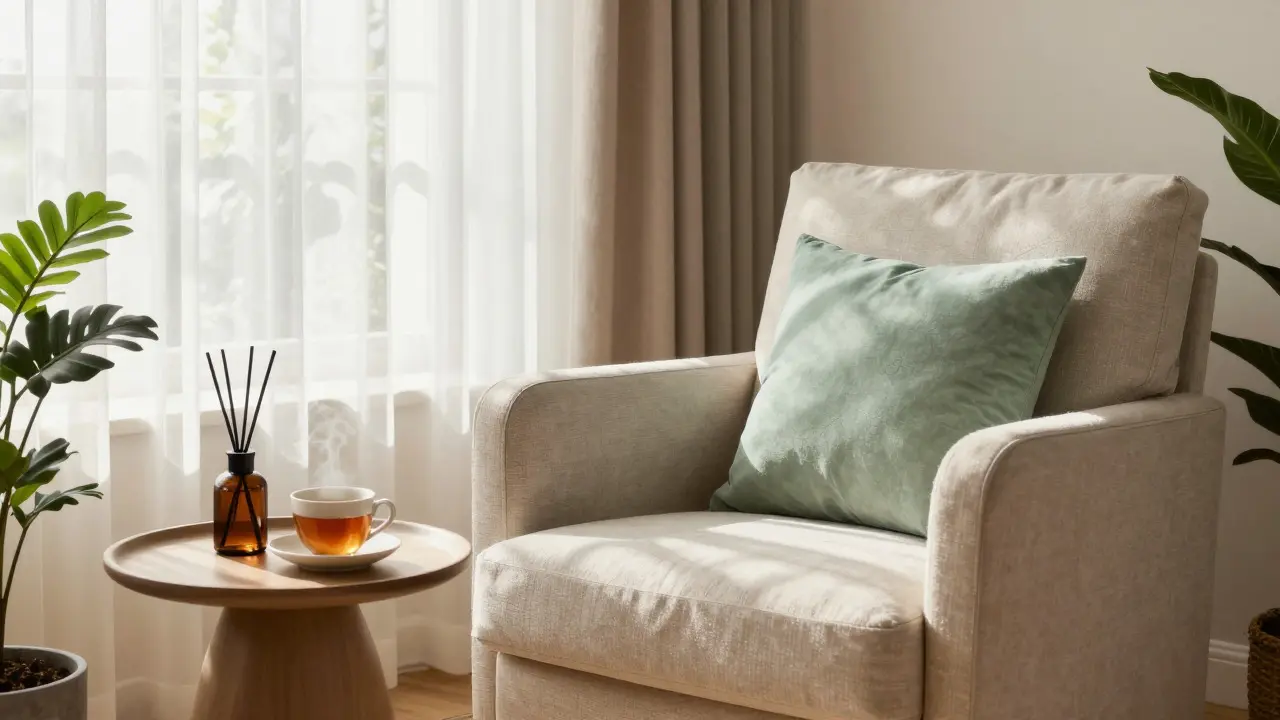
Your environment plays a huge role in your stress levels. If your home is cluttered, noisy, and chaotic, your brain will interpret it as a high-threat zone. Creating a dedicated space for relaxation sends a strong signal to your nervous system.
This doesn’t mean you need a separate meditation room. It could be a specific corner of your bedroom, a comfortable chair by the window, or even a spot in your backyard. The key is consistency. Use this space only for relaxing activities. Don’t bring your laptop there. Don’t do chores there.
Incorporate sensory cues to reinforce this association:
- Lighting: Use warm, dim lighting instead of harsh overhead bulbs. Blue light suppresses melatonin, keeping you alert.
- Scent: Lavender, chamomile, and bergamot have been shown to lower cortisol levels. A simple essential oil diffuser can transform a space.
- Sound: White noise, nature sounds, or silence. Avoid podcasts or news during your relaxation time. Let your mind wander without external input.
When you enter this space, your brain should automatically begin to shift into parasympathetic mode. It’s a form of classical conditioning, similar to Pavlov’s dogs, but working in your favor.
Digital Detox: Protecting Your Attention
In 2026, digital overload is perhaps the biggest barrier to inner peace. Social media platforms are engineered to keep you engaged, often by triggering outrage or FOMO (fear of missing out). Constant notifications fragment your attention span, making deep relaxation difficult.
You don’t need to throw away your smartphone. But you do need boundaries. Start with a "no-phone zone" in the bedroom. Buy a traditional alarm clock. This simple change can improve sleep quality significantly, as you won’t be tempted to scroll before bed or first thing in the morning.
Try a daily "digital sunset." One hour before bed, turn off all screens. Read a physical book, journal, or stretch. This gives your brain time to wind down and produce melatonin. During the day, use apps that limit screen time or block distracting sites during work hours. Protecting your attention is protecting your peace.
Nature Immersion: The Restorative Power of Green Space
There’s a reason why a walk in the park feels better than a walk in the mall. Nature has a restorative effect on the human psyche. This concept, known as Attention Restoration Theory, suggests that urban environments drain our cognitive resources, while natural settings replenish them.
Studies show that spending just 20 minutes in nature can significantly lower cortisol levels. You don’t need to hike a mountain. A local park, a community garden, or even tending to houseplants can provide benefits. The key is to engage with nature mindfully. Put away your phone. Listen to the birds. Feel the breeze. Watch the leaves move.
If you live in a dense urban area like Adelaide, seek out green corridors or botanical gardens. The visual complexity of nature is different from urban chaos. It’s complex but not threatening. This "soft fascination" allows your directed attention to rest and recover.
Building a Sustainable Practice
Finding inner peace isn’t a one-time event. It’s a daily practice. Like brushing your teeth, it requires consistency. Don’t wait until you’re overwhelmed to start relaxing. Build small habits into your existing routine.
- Morning: Five minutes of box breathing before checking your phone.
- Midday: A three-minute walk outside during lunch.
- Evening: Ten minutes of progressive muscle relaxation before bed.
Track your progress. Notice how your mood shifts. Notice how quickly you recover from stressful events. Over time, these techniques become second nature. You’ll find that you’re less reactive, more present, and genuinely peaceful, regardless of the chaos around you.
How long does it take to see results from relaxation techniques?
Physiological changes, such as a lowered heart rate, can happen within minutes of practicing deep breathing. However, long-term benefits like reduced baseline anxiety and improved emotional regulation typically require consistent practice over 4 to 8 weeks. Think of it like building muscle; you need repetition to see structural changes.
Can I practice mindfulness if my mind won't stop racing?
Yes. Mindfulness isn't about stopping thoughts; it's about observing them without judgment. If your mind races, acknowledge it: "I am having a racing thought." Then gently return your focus to your anchor, such as your breath. The act of returning is the rep that strengthens your mindfulness muscle.
Is progressive muscle relaxation safe for everyone?
Generally, yes. However, if you have chronic pain conditions, recent injuries, or high blood pressure, consult your doctor before starting. You may need to modify the intensity of the muscle contractions or avoid certain muscle groups entirely.
What is the best time of day to practice relaxation techniques?
The best time is whenever you can consistently do it. Many people find morning sessions helpful for setting a calm tone for the day, while evening sessions aid in sleep preparation. Experiment with different times to see what fits your schedule and energy levels.
Do I need special equipment for these techniques?
No. Breathing, mindfulness, and progressive muscle relaxation require no equipment. Optional tools like a timer, a comfortable chair, or essential oils can enhance the experience but are not necessary for effectiveness.