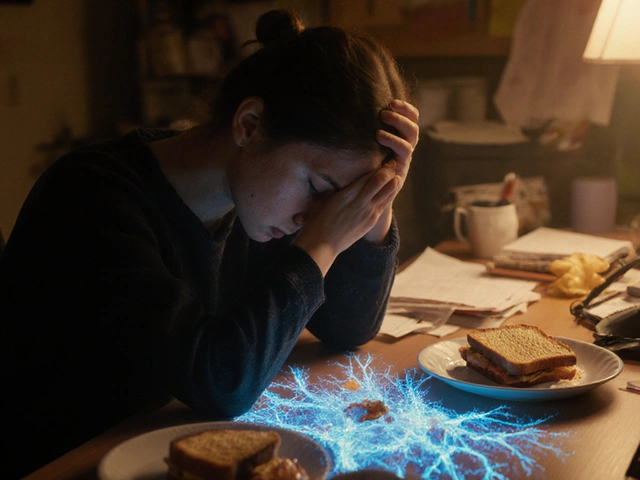
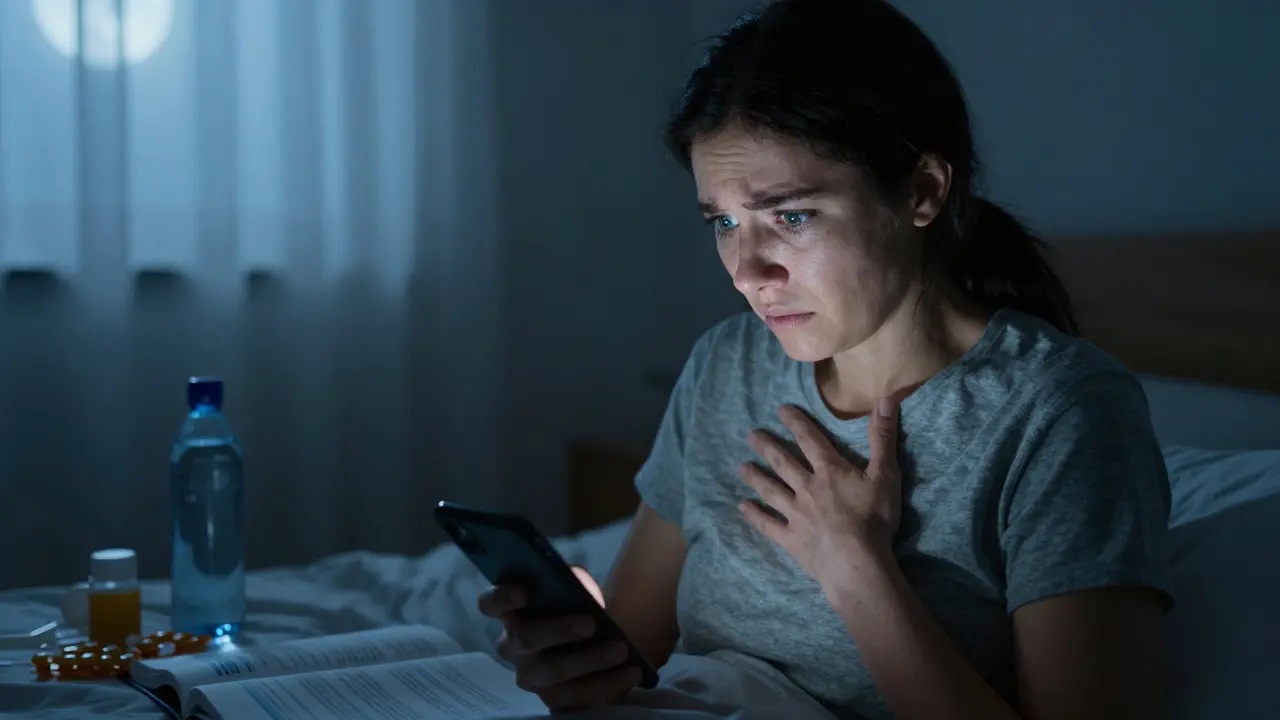
You check your pulse five times a day. You Google every ache, every weird sensation, and end up convinced you have cancer, a brain tumor, or a rare autoimmune disease. You’ve been to three doctors. They all say you’re fine. But you don’t believe them. Not really. Because if you’re not sick now, you will be. Soon. And no one will catch it in time.
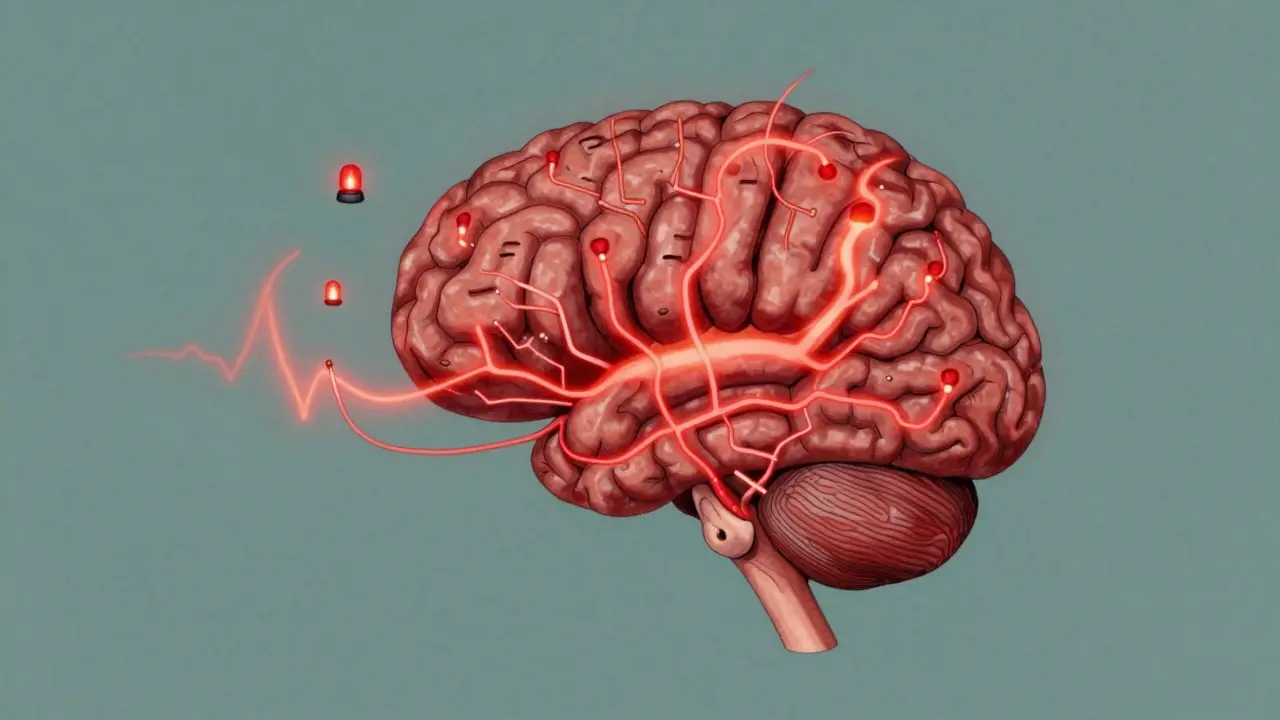
This isn’t just being cautious. This is health anxiety - and it’s not in your head because you’re dramatic. It’s in your head because your brain is stuck in overdrive, mistaking normal bodily signals for life-threatening danger. Your body isn’t broken. Your alarm system is.
What Health Anxiety Actually Feels Like
People with health anxiety don’t just worry about getting sick. They live in a constant state of physical vigilance. A twinge in the chest? Heart attack. A headache? Brain tumor. A burp? Esophageal cancer. You scan your body like a detective hunting for clues. Every flutter, twitch, or warmth becomes evidence.
And it’s exhausting. You might spend hours reading medical forums, watching YouTube videos about rare diseases, or calling your doctor just to ask if a symptom is "normal." You avoid hospitals because you’re terrified of what they might find - but you also can’t stop going back. You’ve canceled plans, missed work, and lost sleep because your mind convinced you that a muscle spasm was a sign of ALS.
It’s not about being a hypochondriac. That word makes it sound like you’re being silly. But this isn’t silliness. This is your nervous system screaming at you, even when there’s no fire.
How Your Body Lies to You
Your body sends signals all the time. Your heart beats. Your stomach gurgles. Your muscles tense. Your breathing shifts. These are normal. But when you’re anxious, your brain starts treating them like red flags.
Here’s what happens: A tiny, harmless sensation - maybe a slight dizziness from standing up too fast - gets caught in your anxiety loop. Your brain thinks, "This could be a stroke." That thought triggers fear. Fear releases adrenaline. Adrenaline makes your heart race, your hands sweat, your breathing shallow. Suddenly, you’re having a panic attack - and now you’re convinced you’re dying.
You didn’t get sick. Your body didn’t change. Your brain just rewrote the story. And once that story sticks, it’s hard to let go. You start avoiding things that might trigger symptoms - skipping exercise because you fear a chest pain, skipping meals because you worry about nausea, skipping social events because you don’t want to be in a crowded place where you might feel dizzy.
Studies from the Journal of Anxiety Disorders show that people with health anxiety are more likely to notice and remember bodily sensations than those without it. They don’t have worse symptoms - they just pay way more attention to them.
The Vicious Cycle of Checking and Reassurance
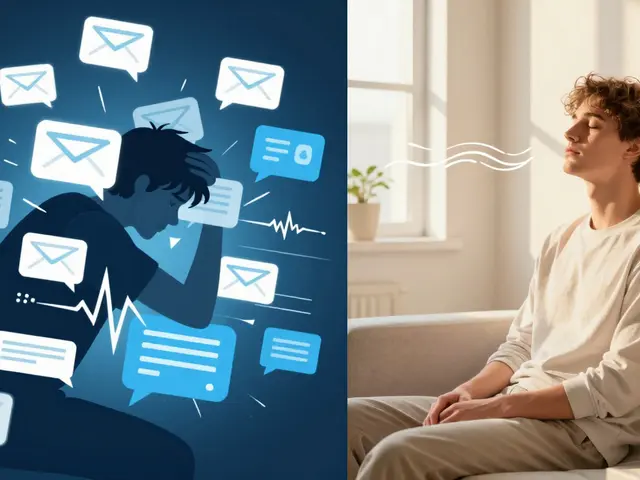
When you feel a symptom, you do one of two things: check it, or avoid it. Both make it worse.
Checking means Googling symptoms, taking your blood pressure, pressing on your neck for lumps, or asking your partner if you look pale. Each time you check, you get a temporary sense of relief. But that relief is short-lived. The next time the symptom shows up, the fear is stronger. You need to check again. And again. And again.
Reassurance-seeking is just as damaging. You call your doctor. They say you’re fine. You feel better for an hour. Then you notice a new sensation. The cycle starts over. You might even see multiple doctors - one after another - hoping someone will finally say, "Yes, you’re really sick." But no one says that. Because you’re not.
Here’s the cruel twist: The more you seek reassurance, the more your brain learns that the only way to feel safe is to keep checking. It’s like trying to put out a fire by pouring gasoline on it.
Why Therapy Works When Medicine Doesn’t
Medicine can rule out physical illness. But it can’t fix a brain that’s wired to misinterpret safety.
Cognitive Behavioral Therapy (CBT) is the most proven treatment for health anxiety. It doesn’t tell you to stop worrying. It teaches you how to stop reacting to worry.
In CBT, you learn to notice the thoughts that trigger your fear: "My heartbeat is too fast - I’m having a heart attack." Then you learn to challenge them: "Is that true? Have I ever had a heart attack? Do people ever feel this way and be perfectly healthy?" You start keeping a log - not of your symptoms, but of what happened after you had them. Did you die? Did you get sick? Almost always, the answer is no.
You also learn to reduce checking behaviors. Not all at once. But slowly. One day, you skip Googling. The next day, you wait 30 minutes before calling your doctor. The fear spikes - and then it drops. You survive it. And each time you do, your brain learns: "I’m not in danger. I don’t need to check."
A 2023 meta-analysis in The Lancet Psychiatry found that CBT reduced health anxiety symptoms by over 60% in 80% of participants. Medication can help - SSRIs like sertraline are often prescribed - but therapy changes how you think. That’s the real fix.
What You Can Do Right Now
You don’t need to wait for a therapist to start feeling better. Here’s what works:
- Delay your checking. When you feel a symptom, set a timer for 15 minutes. Don’t Google. Don’t call anyone. Just sit with the feeling. Notice how it changes. It will.
- Write down your fears. Keep a notebook. When you feel anxious, write: "I’m afraid I have ______ because ______." Then write: "What’s the evidence? What’s the evidence against it?" You’ll start seeing patterns.
- Stop searching. Block medical websites on your phone. Use an app like Freedom or StayFocusd. No more late-night symptom deep dives.
- Focus on living, not monitoring. What did you enjoy before health anxiety took over? Walks? Music? Talking to friends? Go back to those. Even if you’re scared. The goal isn’t to feel calm - it’s to live anyway.
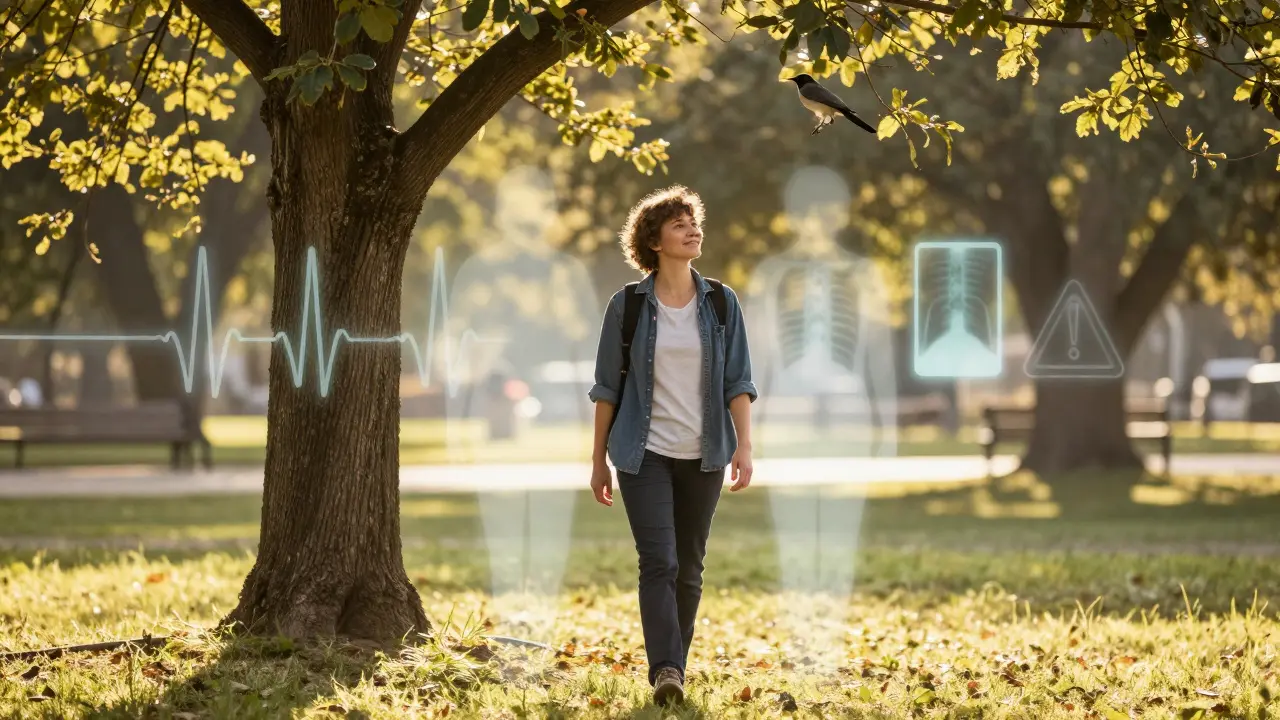
It’s Not Just in Your Head - It’s in Your Nervous System
Health anxiety isn’t weakness. It’s a learned response. Your nervous system got stuck in threat mode, and now it’s hypersensitive. But it can be retrained.
Think of it like a smoke alarm that goes off every time you toast bread. You don’t need to tear down your house. You just need to recalibrate the alarm.
People recover from health anxiety every day. Not because they stopped having symptoms. But because they stopped treating every symptom like a crisis.
You can do this. Not tomorrow. Not after your next doctor’s visit. Right now. One small step. One breath. One moment where you choose to not check, not search, not fear - and just be.
When to Seek Help
You don’t need to suffer alone. Reach out if:
- Your anxiety is keeping you from work, relationships, or daily life
- You’ve had multiple medical tests and all came back normal
- You spend more than an hour a day worrying about your health
- You’ve tried to stop checking or Googling but can’t
A psychologist trained in CBT is your best next step. In New Zealand, you can get subsidized therapy through your GP. Ask for a referral to a mental health provider who specializes in anxiety disorders.
Is health anxiety the same as hypochondria?
Yes, health anxiety is the modern term for what was once called hypochondria. The name changed because "hypochondria" carried stigma and implied the person was being dramatic. Health anxiety is a recognized mental health condition in the DSM-5, with clear diagnostic criteria. It’s not about being overly cautious - it’s about a brain that’s wired to misinterpret normal bodily sensations as dangerous.
Can health anxiety cause real physical symptoms?
Yes - but not because you have a hidden disease. Anxiety triggers your fight-or-flight response, which causes real physical effects: rapid heartbeat, muscle tension, dizziness, nausea, tingling, fatigue. These are not signs of cancer or heart disease. They’re signs of stress. Your body is reacting to fear, not illness. That doesn’t make the symptoms fake - it just means the cause is your nervous system, not a tumor.
How long does health anxiety last?
Without treatment, it can last years - even decades. But with the right help, most people see major improvement in 12 to 16 weeks of therapy. Recovery isn’t about never feeling anxious again. It’s about no longer letting anxiety control your life. Many people learn to notice the thoughts, let them pass, and keep living - even if the fear occasionally pops up.
Can medication help with health anxiety?
Yes, but not as a standalone solution. SSRIs like sertraline or escitalopram are commonly prescribed and can reduce the intensity of anxiety symptoms. They help calm the nervous system enough so you can benefit from therapy. Medication doesn’t change how you think - therapy does. The best results come from combining both, especially if your anxiety is severe.
Will I ever stop worrying about my health completely?
You may still notice bodily sensations - everyone does. The goal isn’t to never worry again. It’s to stop letting worry dictate your choices. Someone in recovery might feel a chest tightness and think, "Hmm, that’s odd," then go make tea instead of calling an ambulance. That’s progress. You don’t need to feel 100% safe to live fully. You just need to be willing to move forward even when you’re scared.
What Comes Next
Recovery from health anxiety isn’t linear. Some days will feel easier. Others, the fear will crash back. That’s normal. The key is to keep showing up - for yourself, not for perfection.
Start small. Today, don’t Google your symptoms. Just breathe. Tomorrow, write down one fear and one fact that contradicts it. The next day, go for a walk without checking your pulse.
You’re not broken. You’re not crazy. You’re someone whose brain got stuck on a loop - and loops can be broken. One quiet moment at a time.