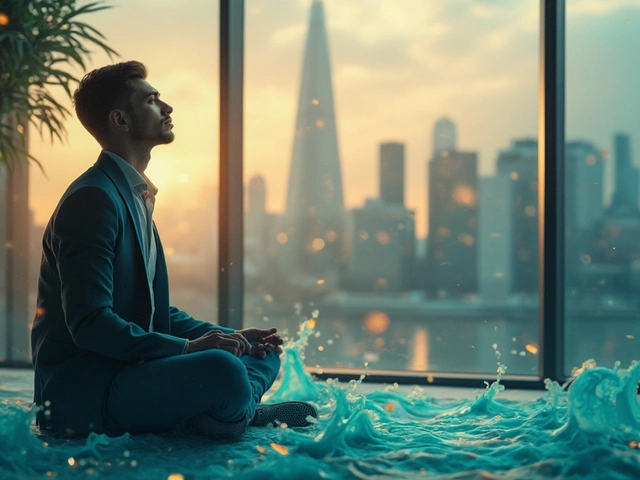

When we talk about being calm, we aren't talking about being a robot or ignoring your problems. It is about the gap between a stressful event and your reaction to it. If a car cuts you off in traffic and you spend the next three miles shouting at the dashboard, that gap is non-existent. If you notice the anger, breathe, and decide that a bad driver isn't worth your heart rate spiking, you have mastered that gap. That is where the transformation happens.
The Biology of a Busy Mind
To fix the noise, you have to understand why it is there. Your brain has a built-in alarm system called the Amygdala, which is a small, almond-shaped set of neurons responsible for the fight-or-flight response. It doesn't know the difference between a saber-toothed tiger and a passive-aggressive email from your boss; it just knows there is a threat. This triggers a flood of Cortisol, the primary stress hormone that keeps you alert but eventually wears you down if it never turns off.
When you live in a state of constant agitation, your Prefrontal Cortex-the part of the brain responsible for logic and decision-making-basically goes offline. This is why you say things you regret or forget where you put your keys when you are stressed. Bringing calmness back into your life isn't just about "relaxing"; it is about telling your amygdala that you are safe so your logical brain can take the wheel again.
Practical Ways to Lower Your Baseline
You can't just decide to be calm during a crisis if your baseline level of stress is already at a nine out of ten. You need to lower the overall volume of your nervous system. One of the most effective ways to do this is through Vagus Nerve Stimulation. The vagus nerve is the longest nerve of your autonomic nervous system, acting as a highway between your brain and your internal organs. When you stimulate it, you flip the switch from "stress" to "rest and digest."
You can do this without any fancy equipment. Try these techniques throughout your day:
- Physiological Sighs: Take a deep breath in through your nose, then add a tiny extra sip of air at the very top before exhaling slowly through your mouth. This collapses the air sacs in your lungs in a way that signals the brain to lower the heart rate.
- Cold Exposure: Splashing ice-cold water on your face or taking a 30-second cold shower triggers a dive reflex that instantly slows your heart rate.
- Humming or Chanting: Because the vagus nerve passes by the vocal cords, the vibration of humming a song or a low tone physically stimulates the nerve.
The Art of Emotional Regulation
Calmness isn't about the absence of emotion; it is about Emotional Regulation. This is the ability to experience a feeling without being consumed by it. Think of your emotions like weather patterns. You are the mountain; the storm is the emotion. The storm might be violent, but the mountain remains unmoved.
A great tool for this is the "Name it to Tame it" technique. When you feel a surge of anxiety, instead of saying "I am anxious," say "I am experiencing a feeling of anxiety." This small linguistic shift creates a distance between your identity and the emotion. You aren't the anxiety; you are the observer of the anxiety. Once you label the feeling, the amygdala's activity actually decreases, and your prefrontal cortex starts to engage again.
| Situation | Reactive Response (High Stress) | Calm Response (Regulated) |
|---|---|---|
| Work Deadline | Panic, multitasking poorly, skipping meals. | Breaking tasks into chunks, timed breaks. |
| Interpersonal Conflict | Defensiveness, interrupting, raising voice. | Active listening, pausing before speaking. |
| Unexpected Error | Self-criticism, "Why does this always happen?" | Problem-solving, "How do I fix this now?" |

Building a Calm Environment
Your brain is constantly scanning your surroundings for cues. If your desk is covered in old coffee cups and three different screens are flashing notifications, your brain interprets that as chaos, which keeps your cortisol levels elevated. You can use Environmental Psychology to trick your mind into a state of peace.
Start by controlling your sensory inputs. High-frequency noise, like a buzzing light or a loud fan, can create a subtle layer of stress you aren't even aware of. Use noise-canceling headphones or white noise to create a sonic sanctuary. Lighting also plays a huge role. Harsh overhead fluorescent lights mimic the midday sun and can keep you in a state of high alertness. Switching to warmer, lower-level lamps in the evening tells your brain it is time to wind down.
Beyond the physical, consider your digital environment. The "infinite scroll" of social media is designed to trigger dopamine loops that leave you feeling restless and inadequate. Set a hard boundary: no screens for the first 60 minutes of the day. When you start your morning by reacting to other people's lives and demands, you are training your brain to be in a reactive, stressed state. Starting with silence or a simple book puts you back in the driver's seat.
Mindfulness and the Power of Now
Most of our stress doesn't come from what is happening right now, but from our memories of the past or our projections of the future. Mindfulness is the practice of anchoring yourself in the present moment. It sounds simple, but in a world designed to steal your attention, it is a radical act.
You don't need to sit on a cushion for an hour to be mindful. Try the "5-4-3-2-1" grounding technique when you feel the world closing in: acknowledge 5 things you see, 4 things you can touch, 3 things you hear, 2 things you can smell, and 1 thing you can taste. This forces your brain to switch from abstract worrying to concrete sensory processing, which effectively kills the panic loop.
Combine this with Mindful Breathing. Not the forced, deep breathing that sometimes makes people feel more anxious, but simply noticing the air as it enters your nostrils and leaves your lips. By focusing on the physical sensation of breath, you give your mind a home base to return to whenever the external world gets too loud.
Integrating Calmness into Your Routine
The goal isn't to be perfectly calm 100% of the time-that's impossible and honestly, a bit boring. The goal is to increase your recovery speed. How quickly can you go from a state of agitation back to a state of equilibrium? This is what experts call "resilience."
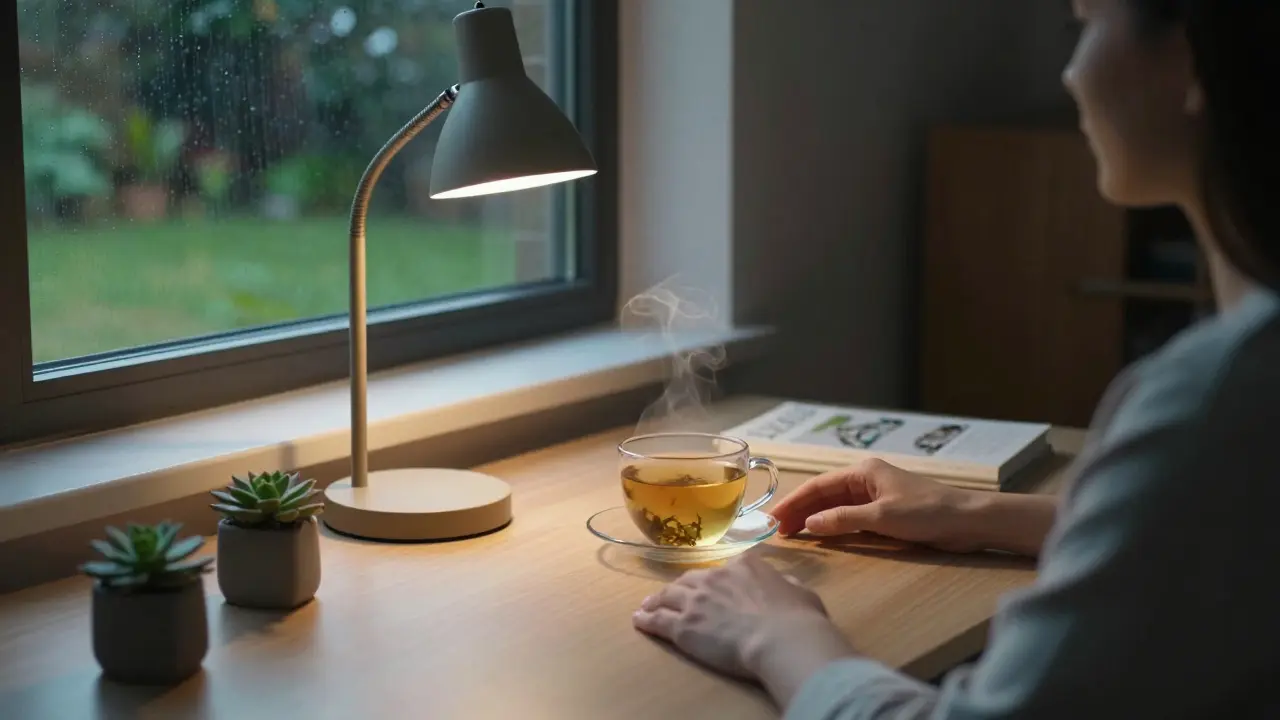
To build this, create "calmness anchors" throughout your day. These are small, non-negotiable moments of peace. It could be the three minutes you spend drinking your tea without looking at your phone, or the walk from your car to your front door where you consciously drop your shoulders. These anchors prevent stress from accumulating like a snowball; instead of one giant explosion at the end of the week, you release the pressure in small increments.
Can you actually learn to be a calm person, or is it just a personality trait?
While some people have a naturally more laid-back temperament, calmness is largely a set of learned behaviors and biological responses. Through neuroplasticity, you can actually rewire your brain to respond less aggressively to stress. By consistently practicing regulation techniques, you strengthen the connection between your prefrontal cortex and your amygdala, making a calm response your new "default" setting.
Doesn't being too calm make you less productive?
There is a common myth that stress is the only fuel for productivity. While a small amount of pressure can help you hit a deadline, chronic stress actually impairs cognitive function, kills creativity, and leads to burnout. True calmness is "focused calm." It allows you to work with a clear head, make better decisions, and maintain a steady pace without the exhausting peaks and valleys of anxiety-driven work.
What should I do if I feel a panic attack starting?
The fastest way to break a panic loop is to engage the physical body. Try the "Cold Water Shock" by splashing your face with freezing water or holding an ice cube in your hand. This forces the brain to pivot from the internal panic to the external sensory intensity. Once the peak of the panic subsides, use the 5-4-3-2-1 grounding method to stabilize your environment before attempting any deep breathing.
How long does it take to see a difference in my stress levels?
You will feel the biological effects of things like the physiological sigh or cold water instantly. However, shifting your overall baseline of calmness usually takes a few weeks of consistent practice. Think of it like fitness; you won't see a six-pack after one gym session, but after 21 days of managing your reactions and optimizing your environment, you'll notice that things which used to make you snap now only cause a slight ripple.
Is meditation necessary for achieving calmness?
Meditation is a powerful tool, but it is not the only path. If sitting in silence feels frustrating or impossible for you, focus on "active mindfulness." This includes activities like walking in nature, mindful eating, or even focused cleaning. The core requirement is attention-shifting your focus from the mental noise to a physical sensation. If you can do that, you are practicing the essence of meditation regardless of whether you are sitting on a mat.
Next Steps for Your Journey
If you are feeling overwhelmed, don't try to implement everything at once. Pick one biological hack (like the physiological sigh) and one environmental change (like the no-phone morning). Once those feel natural, add a mental tool like the "Name it to Tame it" technique.
For those who struggle with severe, chronic anxiety that prevents daily functioning, it is always a good idea to pair these lifestyle changes with professional support. A therapist can help you identify the specific triggers that keep your amygdala on high alert, allowing you to apply these calmness tools more effectively. Remember, the goal isn't perfection; it is simply to be a little more present and a little less reactive than you were yesterday.