
Quick Wins for a Calmer Day
- Lower resting heart rate and improved blood pressure.
- Faster recovery from emotional triggers.
- Higher quality decision-making under pressure.
- Better sleep cycles due to reduced nighttime anxiety.
- Improved interpersonal relationships through active listening.
The Hidden Boost to Your Brain Power
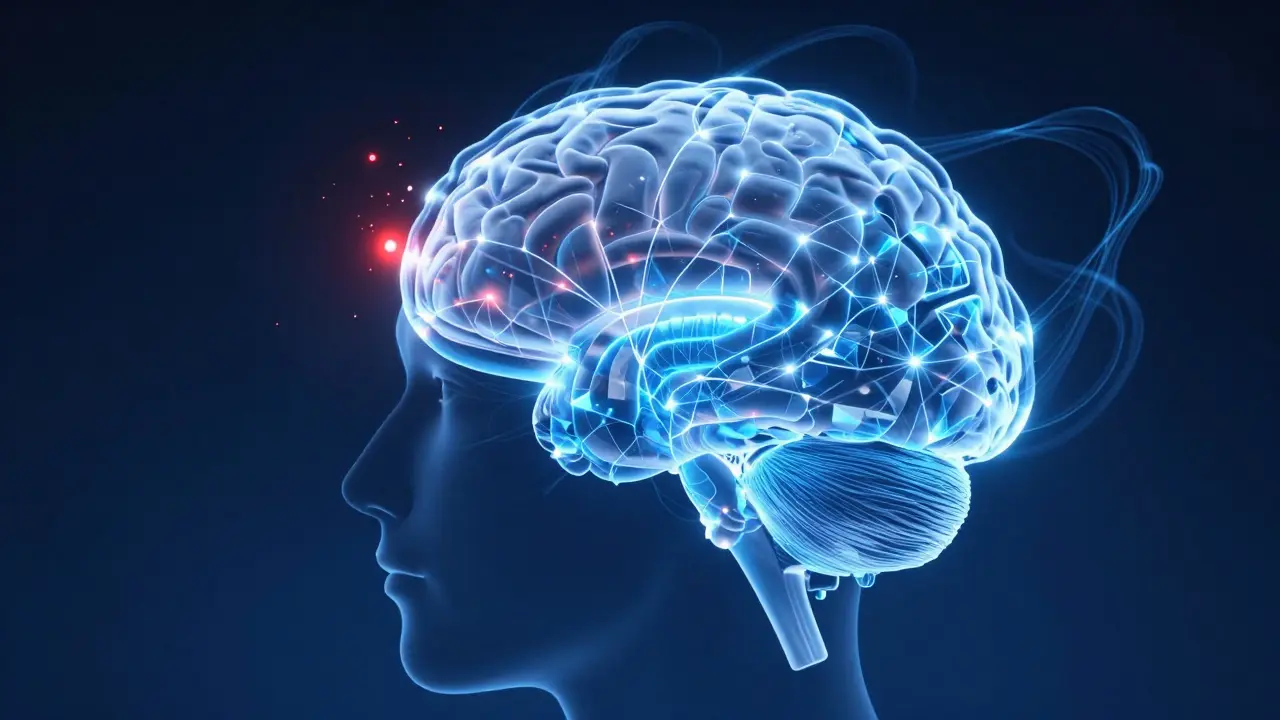
When you're stressed, your brain enters a state of survival. The Amygdala-the part of the brain responsible for the fight-or-flight response-takes over. This effectively shuts down the Prefrontal Cortex, which is where your logic, planning, and complex decision-making happen. Have you ever forgotten a simple word or made a silly mistake during a heated argument? That is your brain losing access to its logic center.
By practicing calmness daily, you train your brain to keep the prefrontal cortex online. This means you don't just "feel better"; you actually think better. You'll notice you can solve problems faster and stay creative even when a deadline is looming. Instead of panicking when a project goes sideways, you move straight into solution mode. This mental shift is the difference between reacting to your life and actually responding to it.
Heart Health and the Vagus Nerve
Calmness isn't just in your head; it's in your nervous system. One of the most unexpected physical benefits is the strengthening of the Vagus Nerve. This is the longest nerve of the autonomic nervous system, acting as a two-way highway between your brain and your heart, lungs, and digestive tract. When you consciously practice calmness-through deep breathing or mindful pausing-you stimulate the "rest and digest" system.
Regularly activating this system lowers your Cortisol levels, the primary stress hormone. High cortisol is like acid for your arteries; it increases inflammation and raises blood pressure. People who cultivate a baseline of calmness often find their resting heart rate drops over time. You aren't just avoiding a panic attack; you are physically protecting your cardiovascular system from the wear and tear of chronic stress.
| Feature | Stress Response (Sympathetic) | Calm Response (Parasympathetic) |
|---|---|---|
| Heart Rate | Rapid/Erratic | Slow/Steady |
| Breathing | Shallow/Chest-based | Deep/Diaphragmatic |
| Focus | Tunnel Vision/Threat-based | Expansive/Analytical |
| Digestion | Suppressed | Active/Efficient |
The Social Magnetism of a Steady Presence
There is a reason we are drawn to people who remain calm during a crisis. It's called Emotional Contagion. Humans subconsciously mimic the emotional states of those around them. If you are anxious, the people in your meeting will likely feel a spike in tension. Conversely, if you remain grounded, you actually signal to others that they are safe. This creates a psychological safety net for everyone in the room.
This benefit manifests in your personal relationships as an increased capacity for empathy. When you aren't preoccupied with your own internal chaos, you can actually hear what someone is saying. You stop waiting for your turn to speak and start listening to understand. This shifts the dynamic from a power struggle to a partnership. You'll likely find that conflicts resolve faster because you aren't adding fuel to the fire with your own emotional volatility.
Metabolic Efficiency and Better Sleep
Constant stress keeps the body in a state of hyper-vigilance, which is incredibly expensive in terms of energy. Your body burns through glucose and oxygen just to keep you on edge. When you practice Mindfulness and calmness, you reduce this energy leakage. Many people report a surprising increase in physical energy levels after they start managing their stress, not because they're doing more, but because they've stopped wasting energy on invisible battles.
This efficiency extends into your sleep. Most sleep issues aren't caused by a lack of tiredness, but by an inability to transition from the "doing" mode of the day to the "being" mode of the night. A calm mind doesn't spend three hours reviewing every mistake made since 2012. Instead, by practicing a wind-down routine that emphasizes calmness, you signal to your brain that the environment is safe, allowing you to enter deep REM sleep faster and stay there longer.

The Mastery of Impulse Control
We've all had that moment where we said something we immediately regretted. That is a failure of the gap between stimulus and response. Daily calmness expands that gap. Instead of an automatic reaction (Stimulus $\rightarrow$ Reaction), you create a space where you can choose your action (Stimulus $\rightarrow$ Space $\rightarrow$ Response).
This leads to a massive improvement in Emotional Regulation. You start to notice the physical signs of frustration-the tight chest, the clenched jaw-before they explode. Once you see the sign, you can apply a calmness technique, like a five-second exhale, to neutralize the surge. This isn't about suppressing your emotions; it's about managing them so they don't manage you. Over time, this becomes your default setting, making you more resilient to the unpredictability of life.
Practical Ways to Build Your Calmness Muscle
You don't need to move to a monastery to find peace. Calmness is a muscle that you build through small, repetitive wins throughout your day. Start with these simple shifts:
- The Micro-Pause: Before you open your laptop or start your car, take three intentional breaths. This resets your nervous system before the day's demands hit.
- Sensory Grounding: If you feel a spike of anxiety, find five things you can see, four things you can touch, three things you can hear, two things you can smell, and one thing you can taste. This pulls you out of your head and back into the physical world.
- Low-Stimulus Windows: Create 15 minutes a day where there are no screens, no music, and no talking. This reduces the constant sensory input that keeps your brain in a state of high alert.
- The "Three-Second Rule": When someone says something that triggers you, count to three before responding. This simple act forces the prefrontal cortex to engage and prevents a purely emotional reaction.
Is calmness the same as being passive or indifferent?
Absolutely not. Passivity is a lack of action due to fear or laziness. Calmness is the ability to take decisive action without being overwhelmed by emotion. A calm person can be incredibly assertive and firm, but they do so with a steady hand rather than an angry voice.
How long does it take to see the benefits of practicing calmness?
You will feel the immediate physiological effects-like a slower heart rate-within seconds of a deep breathing exercise. However, the long-term benefits, such as improved emotional regulation and lower resting cortisol, typically take 4 to 8 weeks of daily practice to become your new baseline.
Can someone with a naturally anxious personality become calm?
Yes. While genetics and personality play a role, the brain possesses neuroplasticity. By consistently using techniques that activate the parasympathetic nervous system, you can physically reshape the neural pathways in your brain to favor a calmer response over an anxious one.
What is the biggest mistake people make when trying to be calm?
The biggest mistake is trying to "force" calmness or suppress anger. When you fight an emotion, you create more internal tension. The key is to acknowledge the feeling ("I am feeling angry right now") and then use a physical tool, like breathing, to soothe the body. Acceptance precedes calmness.
Does calmness affect productivity?
It actually boosts productivity. While stress can provide a short-term burst of energy, chronic stress leads to burnout and "brain fog." A calm mind is better at prioritizing tasks, focusing on one thing at a time, and avoiding the costly mistakes that come from rushing.
Next Steps for Your Journey
If you're feeling overwhelmed, don't try to overhaul your entire life today. Pick one of the micro-habits mentioned above-like the three-second rule-and commit to it for one week. If you find that your physical tension is too high to start with mental exercises, consider light stretching or a short walk to burn off the excess adrenaline first. Once your body feels safe, your mind will find it much easier to settle into a state of lasting calmness.